


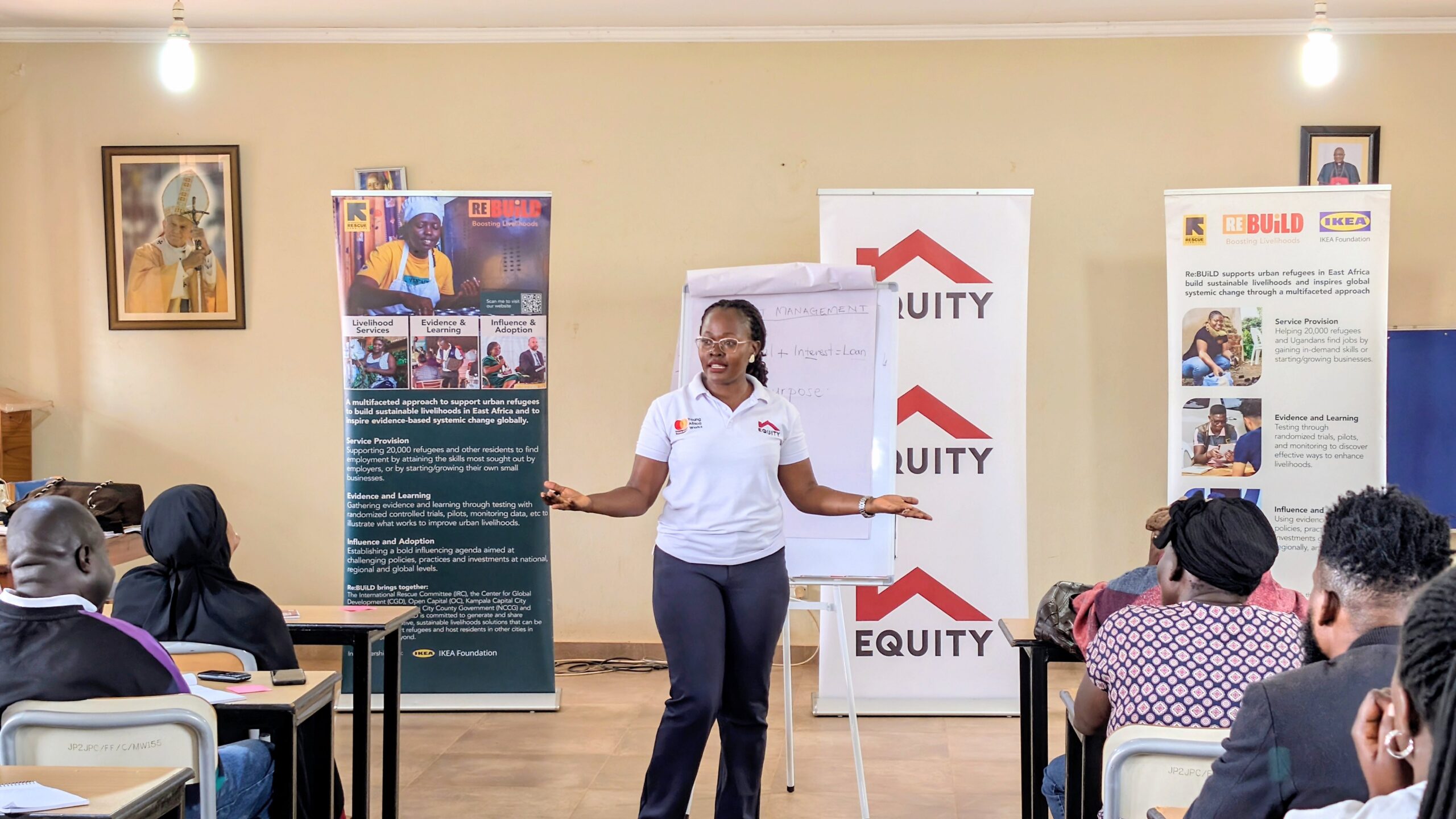
Kampala – Equity Bank Uganda has equipped 200 refugees with financial literacy and enterprise development skills in a move aimed at strengthening their businesses and promoting long-term economic self-reliance.
The two-day training, held at the John Paul II Justice and Peace Centre in Nsambya, was conducted under the International Rescue Committee (IRC) REBUILD Project as part of efforts to enhance the financial capabilities of refugee entrepreneurs and aspiring business owners.
Through the training, Equity Bank’s financial literacy experts guided participants on essential business management practices, including budgeting, saving, record keeping, cash flow management, responsible borrowing, and business planning. The sessions also raised awareness about affordable financing opportunities that can help refugee-owned enterprises grow and become more sustainable.
The initiative reflects Equity Bank’s commitment to advancing financial inclusion by empowering vulnerable communities with practical knowledge and skills that enable them to make informed financial decisions and improve their livelihoods.
Speaking during the training, facilitators emphasized that financial literacy is a critical foundation for building resilient businesses, particularly among refugees seeking to establish stable sources of income in their host communities.
The programme also encouraged participants to adopt an entrepreneurial mindset, identify viable business opportunities, and strengthen the management of existing enterprises to improve profitability and long-term sustainability.
Implemented by the International Rescue Committee under its REBUILD Project, the initiative seeks to support refugees in transitioning from dependence on humanitarian assistance to economic independence through entrepreneurship and improved access to financial services.
With Uganda hosting one of Africa’s largest refugee populations, partnerships between humanitarian organizations and financial institutions such as Equity Bank are increasingly playing an important role in equipping refugees with the skills and financial knowledge needed to build resilient businesses, create employment opportunities, and contribute to local economic development.









Leave a Reply