


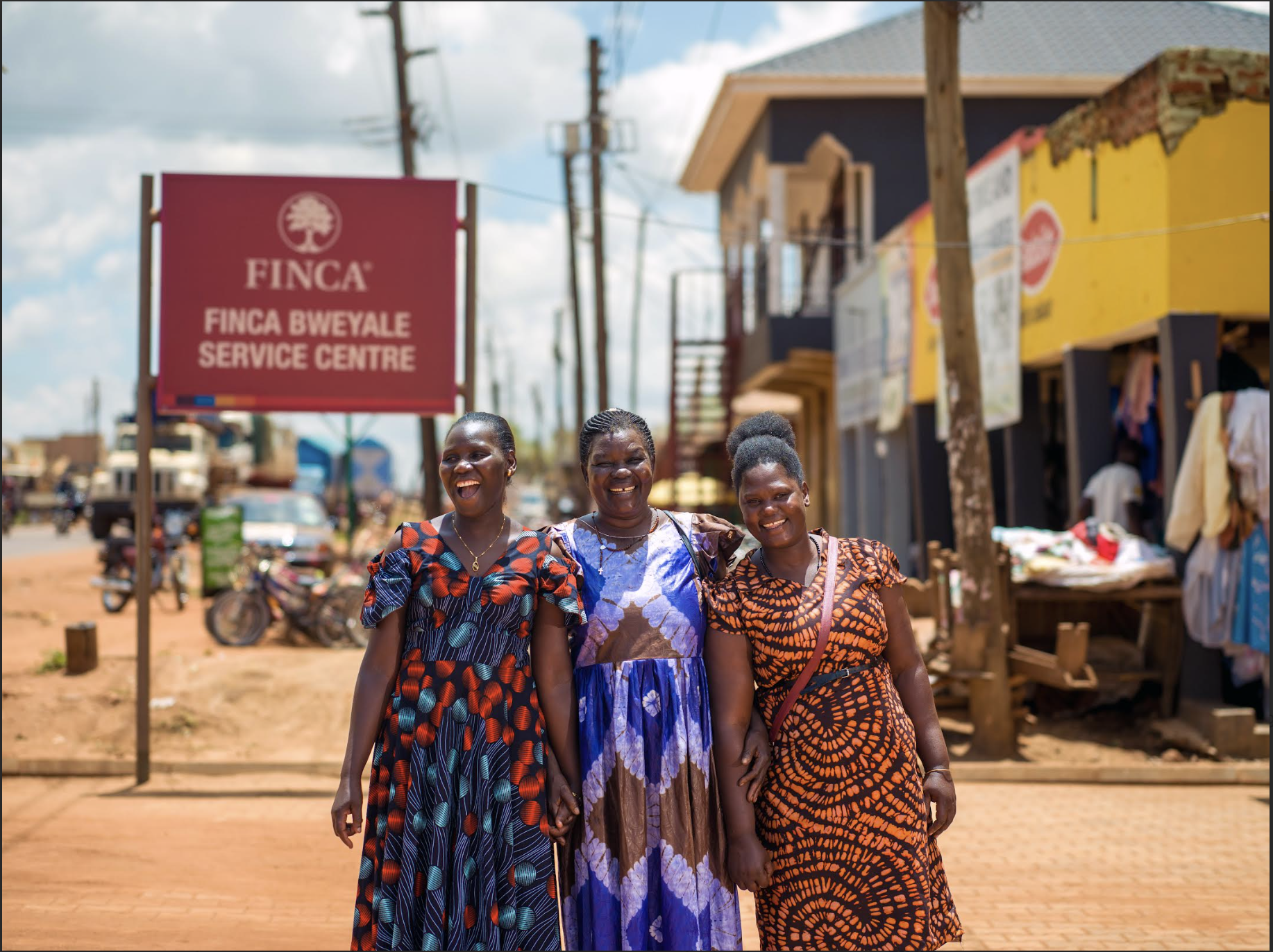
Local entrepreneurs in Bweyale town stand as a testament to the sucess of financial inclusion initiatives for women in rural Uganda.
Across Uganda, women dominate the sectors that keep households and communities functioning that is trade, agriculture, services, and small-scale manufacturing. They run waragi distilleries in Iganga, tailoring shops in Luwero, food stalls in Gulu, and agro-processing mills in Mbarara. They are not on the margins, but they are the economy.
But the biggest barrier to growth remains unchanged: collateral and the different regional gender norms. Many women do not own land, operate informally, juggle businesses with caregiving. And even those with strong cash flows, solid turnover, and reliable customers often find financial institutions asking for land titles they simply do not have. And the result of this is that thousands of promising enterprises remain small not because their owners lack potential, but because the financial system was not designed with them in mind.
Fortunately, this narrative is changing because financial institutions are beginning to rethink traditional lending models by acknowledging that business performance, cash flow consistency, and group trust can be stronger indicators of creditworthiness than land ownership. FINCA Uganda is among those leading this shift by offering women loans without collateral, offering an accessible alternative. Here trust, business cash flows become collateral and peer accountability becomes the guarantor.
The FINCA has number of loan products like Women Enterprise Loan (WEL), VSLA digital and Self-Managed group (SMG) loans which are built around the reality of women’s businesses. These are flexible, scalable, and responsive to opportunity. With access of up to UGX 50 million, women can increase inventory, invest in equipment, purchase land, expand working capital, diversify income streams.
Research consistently shows that when women access capital, the economy responds immediately because businesses expand, employment opportunities increase, household stability improves, children stay in school, local markets grow more resilient. This is not social charity. It is a productive investment.
Giving women access to affordable finance unlocks not just individual potential, but nationwide economic transformation. Empowerment is not a slogan; it is the dismantling of systemic barriers.
This year’s theme “Give to Gain” resonates powerfully with the realities of women entrepreneurs. Women give to their families, to their communities, to their savings groups, and to the growth of this nation. When they gain access to capital, to digital tools, to training, and to supportive financial products, the returns multiply far beyond the individual.
Empowerment works best when it is reciprocal, when institutions give women the tools, women give back tenfold in productivity, repayment, and economic growth.
The writer is (Justine Nabawanuka (Research & Marketing Officer).
















Leave a Reply