



dfcu Group has set an ambitious target of planting 500,000 trees as part of its environmental sustainability agenda, while urging corporate entities in Uganda to enhance transparency regarding their contributions to local communities and the broader economy.
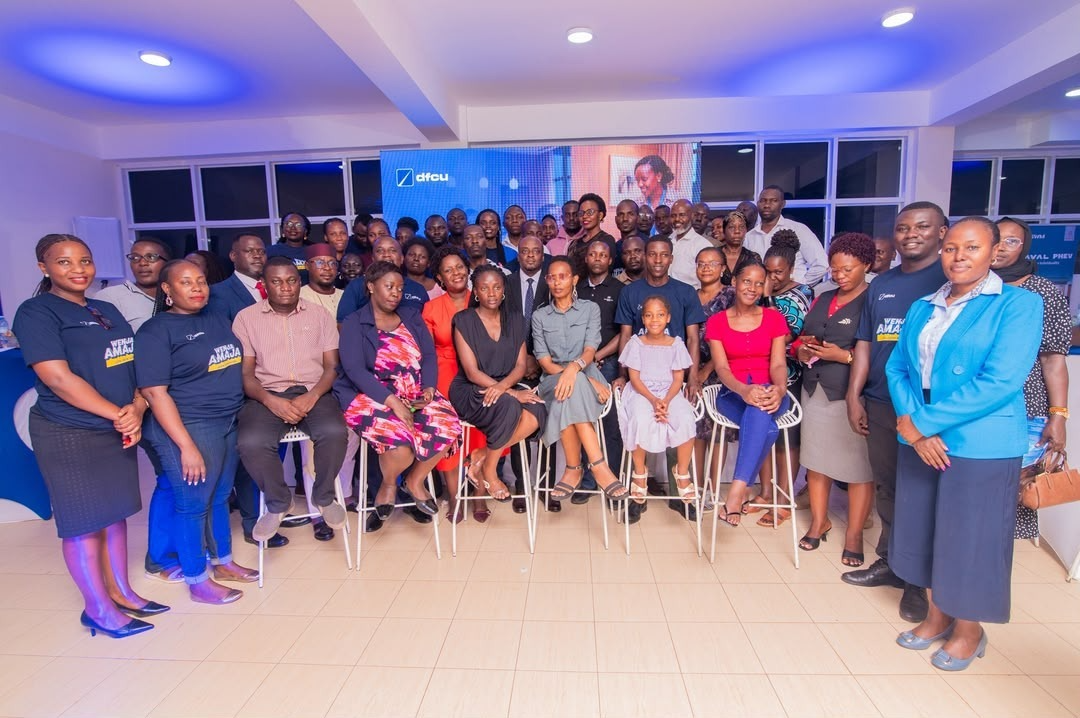
The commitment was highlighted during the official launch of dfcu Bank and dfcu Foundation’s inaugural Report to Society 2025, at the Serena hotel, Kigo, a comprehensive publication documenting the group’s impact across environmental conservation, small business growth, women’s empowerment, agricultural value chains, and community health.
Speaking at the launch, Jimmy D. Mugerwa, Chairman of the Board of Directors of dfcu Limited, the group’s holding company, noted that the publication marks a critical milestone in measuring institutional value beyond financial performance.
“For us, the long-term success of dfcu cannot be measured by financial results alone. Long-term success must be measured not only by financial performance, but also by the value we create for our customers, employees, communities, shareholders, and the wider Ugandan economy,” Mugerwa said, urging other responsible businesses to publish similar impact reports.
Drawing from over three decades of leadership experience in sectors driven by operational discipline and safety, Mugerwa emphasized that sustainability decisions must be judged by whether they leave businesses and ecosystems stronger for future generations. “Today’s shortcut often becomes tomorrow’s expensive challenge,” he cautioned.
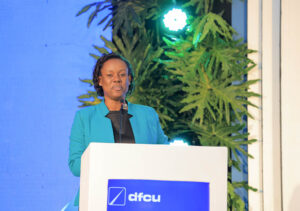
He emphasised that dfcu’s sustainability approach prioritises practical, life-changing interventions over viewing Environmental, Social, and Governance (ESG) frameworks as mere regulatory compliance exercises.
Key environmental actions outlined in the report include the ongoing 500,000-tree planting campaign and single-use plastic reduction partnerships, such as a joint initiative with Serena Hotels to replace plastic water bottles with eco-friendly alternatives.
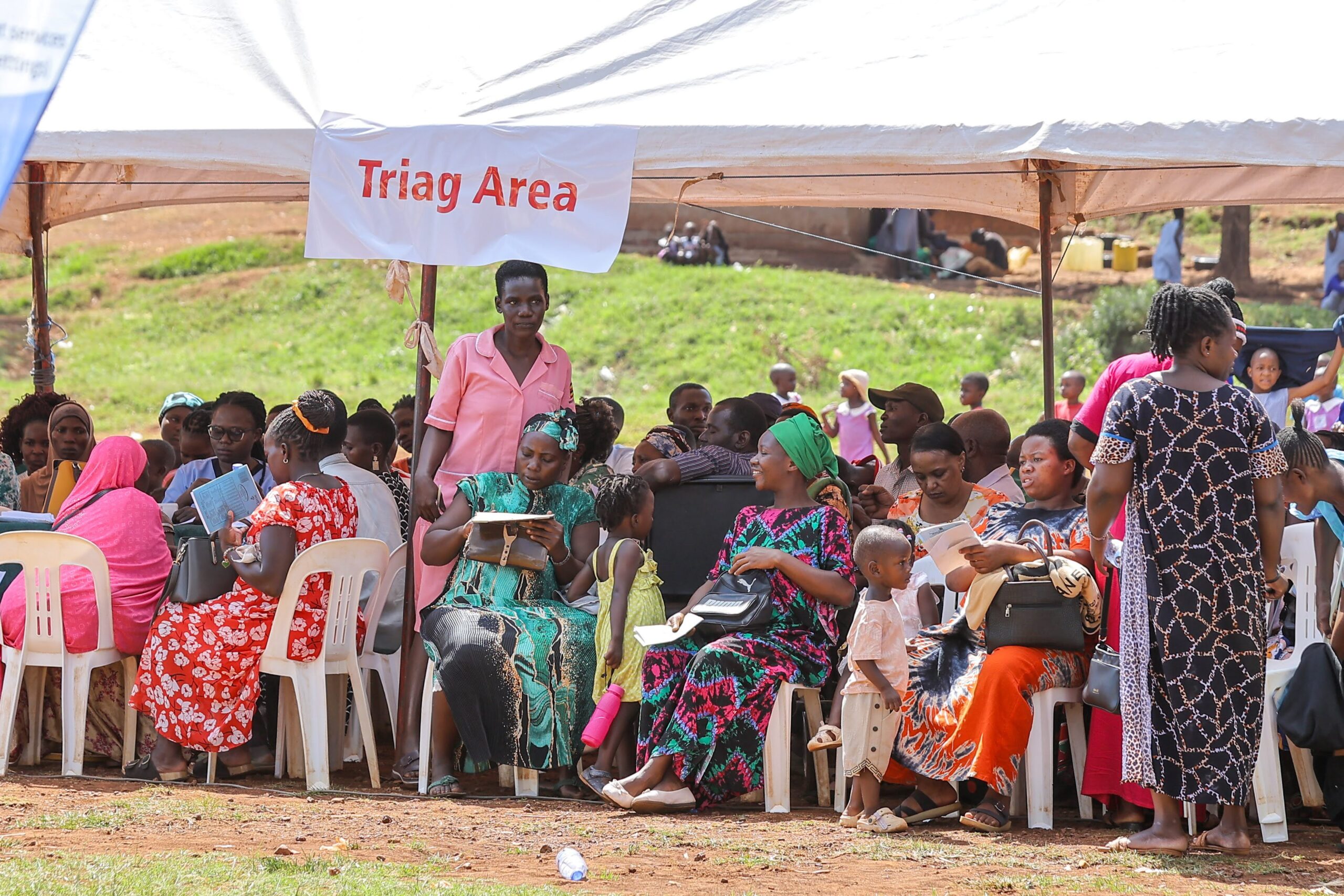
On community health, the report highlighted a medical camp organized in Bwaise, Kampala, which provided free care to approximately 2,000 residents out of an estimated local population of 40,000. While acknowledging the camp reached a fraction of the area’s residents, representatives noted that the intervention provided critical care to underserved families while demonstrating the urgent need to expand corporate healthcare interventions in urban informal settlements. The Bank has also committed UGX 1 billion towards preventive healthcare through a three-year partnership with Rotary Uganda.
Dr. Winifred Mary Tarinyeba Kiryabwire, Chairperson of the Board of Directors of dfcu Bank, stated that the report sets a transparent benchmark for regulators, investors, and customers to assess the financial institution’s governance and long-term societal value.
“For more than six decades, dfcu has been part of Uganda’s economic transformation—supporting businesses, expanding financial inclusion, and creating opportunities for individuals and communities. We recognize that our responsibility extends beyond financial performance to the contribution we make to the society that sustains our business. Our inaugural Report to Society brings that responsibility into focus,” Dr. Kiryabwire said.
The report reveals that dfcu Bank financed 6,527 small and medium-sized enterprises (SMEs) in 2025, while its flagship Women in Business program has supported more than 80,000 women entrepreneurs across the country to broaden female participation in commercial enterprise.
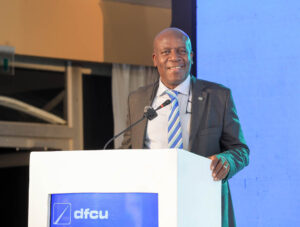
Charles M. Mudiwa, Managing Director and CEO of dfcu Bank, observed that banking rests fundamentally on public trust and resource stewardship, noting that modern ESG principles mirror traditional Ugandan values of natural conservation and community care.
“Uganda’s understanding of sustainability did not begin with the introduction of ESG frameworks. Our communities have long understood the importance of protecting the natural world, preserving what matters, and ensuring that future generations can benefit from what has been entrusted to them. Our customers entrust us with their money, businesses, and confidence. We have a responsibility to account for how we use those resources,” Mudiwa said.
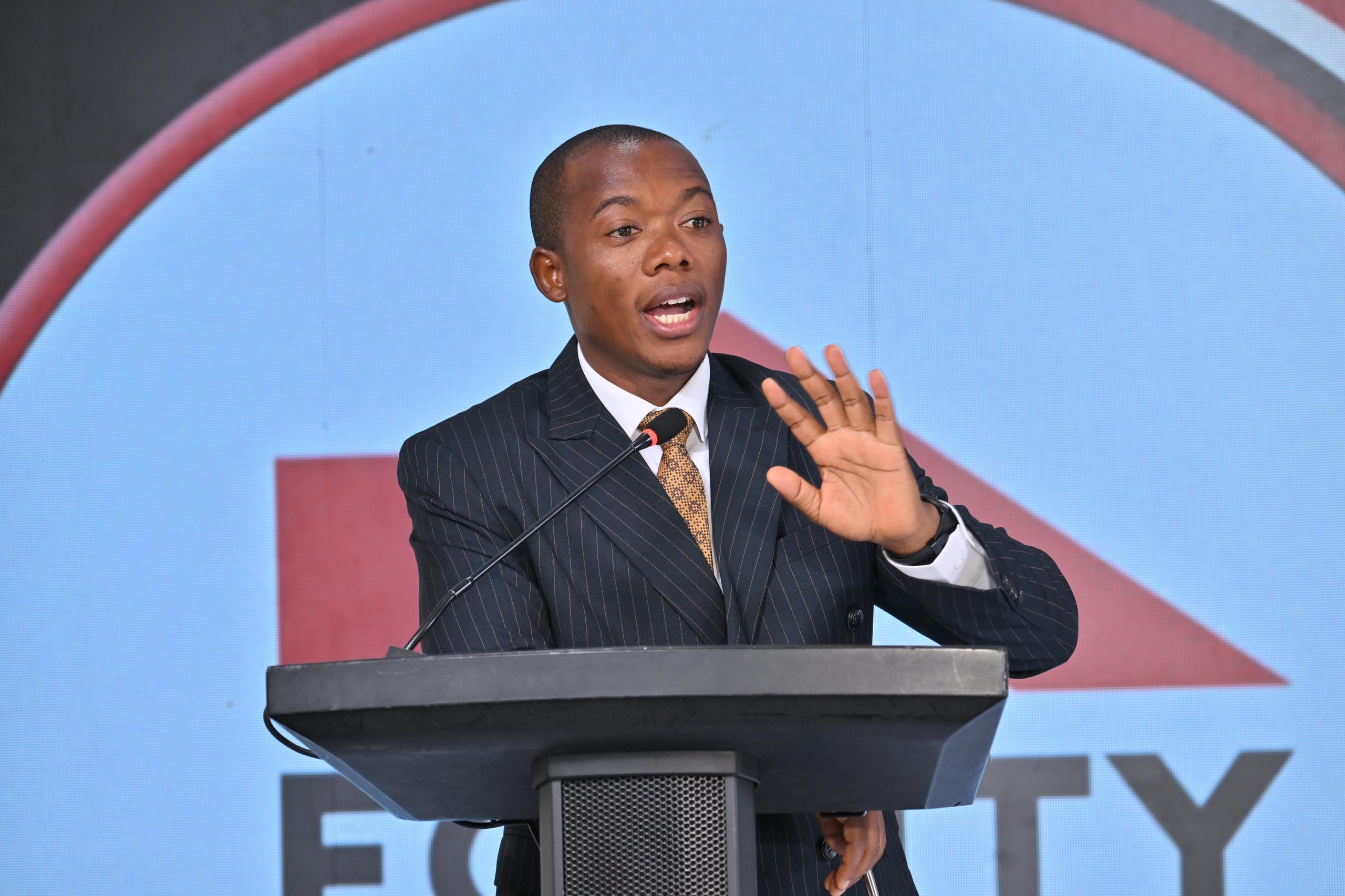
Expanding on the group’s social development engine, Dr. James Ssemwanga, Chairperson of dfcu Foundation, detailed the entity’s 2024 evolution from a Business Development Centre. He explained that the Foundation now focuses heavily on supporting the “missing middle”—promising enterprises requiring technical skills, market linkages, and capital to scale. Having facilitated UGX 38.08 billion in enterprise credit, the Foundation aims to reach more than 100,000 additional beneficiaries between 2025 and 2030.
Operating in Uganda since 1964, dfcu Group reiterated its commitment to supporting Uganda’s broader macroeconomic goals, including the government’s Tenfold Growth Strategy, by combining strong financial performance with responsible corporate citizenship.








Leave a Reply