



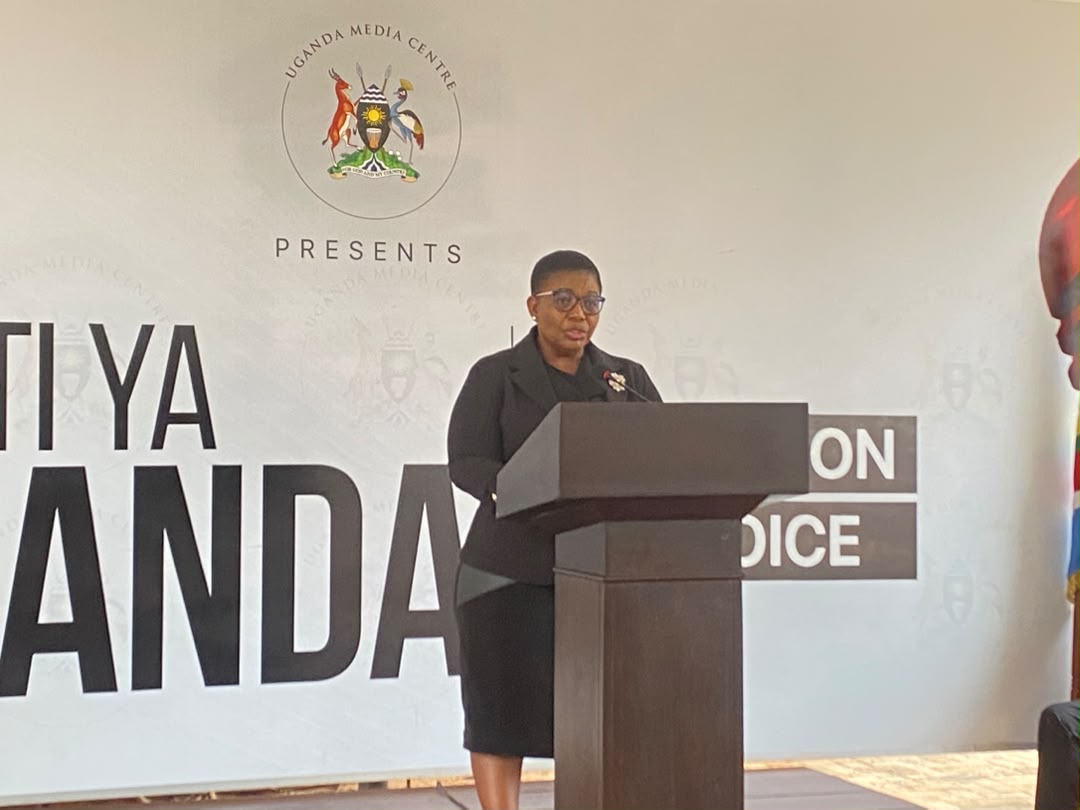
Acting Managing Director UEDCL- Eng. Joselynne R. Rwabwogo
Uganda’s rapid expansion in electricity connections is exposing weaknesses in its distribution infrastructure, with the country’s power distributor seeking $994 million over the next five years to upgrade a network struggling to keep pace with growing demand.
The Uganda Electricity Distribution Company Limited (UEDCL) says its customer base has increased by about 71 per cent, from 1.64 million in 2021 to approximately 2.8 million, while investment in substations, transformers and distribution lines has not matched the pace of expansion.
The pressure is particularly evident in Greater Kampala, where electricity demand has grown by about 60 per cent over the past five years. Some installations are now operating beyond their designed capacity, increasing the risk of equipment failures and prolonged power interruptions.
The challenge presents a major test for UEDCL, which assumed responsibility for electricity distribution from Umeme on April 1, 2025, following the expiry of the latter’s 20-year concession.
The government had expected the transition to public management to improve service delivery, strengthen accountability and reduce electricity costs. However, recurring outages have continued to frustrate consumers, raising questions about the state of the distribution network and the utility’s ability to manage increasing demand.
UEDCL’s proposed investment programme therefore goes beyond routine network maintenance. It points to the need for substantial infrastructure expansion to accommodate a growing customer base and support Uganda’s industrial and economic ambitions.
Of the $994 million required over five years, approximately $107 million has been identified for priority projects up to December 2027, targeting network rehabilitation and additional distribution capacity.
Speaking at a media briefing in Kampala, Acting Managing Director Eng. Joselynne R. Rwabwogo said the company was pursuing immediate interventions alongside longer-term infrastructure investments.
She said the utility was prioritising areas where demand has exceeded available network capacity, including Gayaza, Namugongo and parts of the Kakiri corridor.
In Gayaza, UEDCL has started work on an additional eight-kilometre electricity line to enable the transfer of demand to a substation with available capacity. The company is also working with the Uganda Electricity Transmission Company Limited (UETCL) on measures to relieve pressure along Masaka Road.
Other areas requiring attention include Nakwero, Kiwologooma, Kitukutwe, Kijabijjo and Busukuuma, where rising demand has placed additional pressure on existing installations.
The scale of the challenge is also reflected in the condition of some of the country’s electricity infrastructure. In its recent explanation of the outages, UEDCL said some switching equipment in substations had been in service for more than 25 years, with obsolete components making maintenance and replacement increasingly difficult.
The strain is particularly evident at Mutundwe substation, which has been reported to operate at approximately 130 per cent of its designed capacity. Such loading levels leave limited room to accommodate additional demand and increase the vulnerability of the network when equipment develops faults.
UEDCL has already undertaken network improvements in Seeta, Bukerere, Kawanda, Mbarara and Bombo. In Mubende, network reconfiguration reportedly reduced recorded outages from 12 in one month to three in the following month.
The utility has also stepped up transformer replacement, reporting that it replaced 1,110 distribution transformers during the year ending July 2026, above its target of 853. Average replacement time declined from 38 days at the end of June to fewer than 14 days by the end of August.
However, the availability of transformers remains a concern as demand continues to rise. UEDCL has attributed some of the supply constraints to the limited production capacity of local manufacturers supplying equipment under the Buy Uganda, Build Uganda framework.
The company is reviewing procurement arrangements and engaging the Public Procurement and Disposal of Public Assets Authority on supplementary sourcing options to increase equipment availability.
The infrastructure constraints have also affected new electricity connections. UEDCL says it has been working to clear applications delayed by shortages of meters, with improved supplies and faster testing processes expected to support more installations.
The company connected approximately 80,000 customers over two months and is targeting monthly connections of 50,000.
However, expanding access while struggling to maintain reliable supply presents a difficult balancing act. Every new connection increases the responsibility to ensure that the existing network can deliver electricity consistently.
The wider economic implications are significant. Unreliable electricity forces businesses to rely on generators and other backup sources, increasing operating costs and potentially affecting production, service delivery and investment decisions.
UEDCL’s infrastructure challenge also comes at a time when Uganda is seeking to expand industrial production, agricultural processing and other productive activities under its Tenfold Growth Strategy. These ambitions depend not only on the availability of electricity generation but also on the ability to deliver power reliably to consumers.
The utility has cited a reduction in the end-user electricity tariff from approximately Shs486 to Shs396 per unit, a decline of nearly 19 per cent, as one of the benefits of the transition to public management.
However, lower tariffs alone may not be enough to satisfy consumers if electricity supply remains unreliable.
The proposed $994 million investment will therefore be an important test of whether UEDCL can turn its infrastructure expansion plans into measurable improvements in power reliability, while ensuring that the growing number of Ugandans connected to the grid can depend on the electricity they receive.











Leave a Reply