


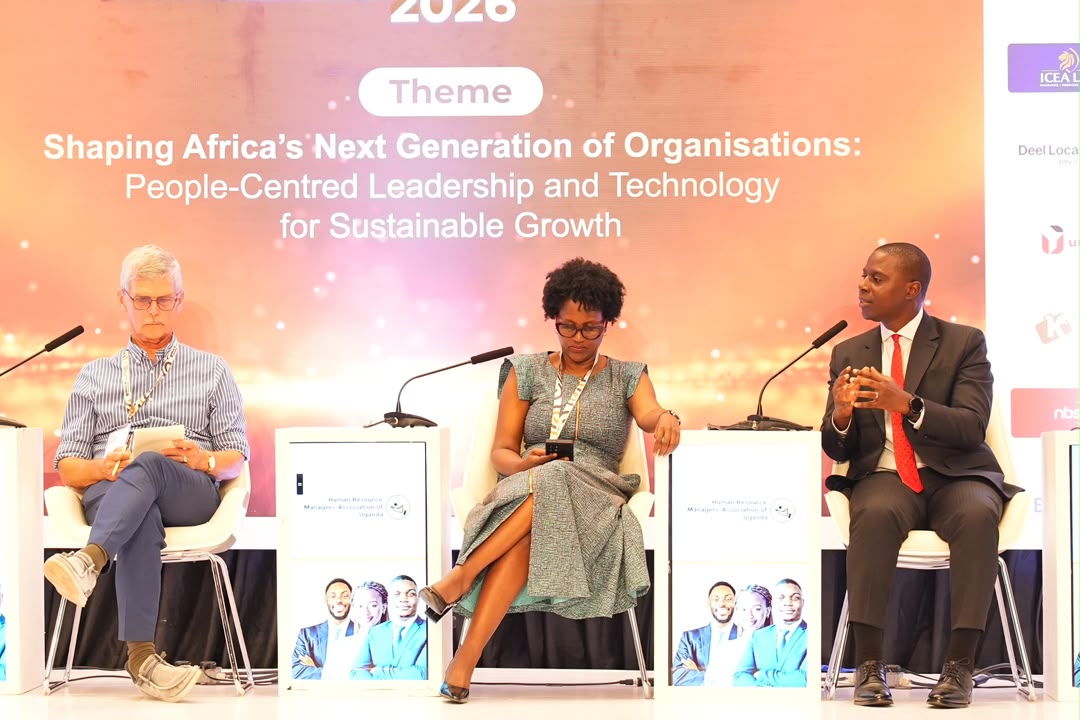
Dr Ian Clarke, Susan Nsibirwa and Ambrose Kibuuka at the HR Conference 2026.
Artificial intelligence is transforming workplaces, with businesses increasingly seeking greater efficiency while balancing technological advancement with employee wellbeing, skills development and inclusive workplace cultures.
In this changing environment, investing in people remains critical to building sustainable organisations. Beyond financial performance and technological advancement, business leaders recognise that employee wellbeing, engagement and continuous skills development are essential to long-term business success.
According to Gallup’s State of the Global Workplace 2026 report, only 20 per cent of employees globally were engaged at work in 2025. Uganda reflects a similar picture, with only 20 per cent of employees engaged and 55 per cent reporting significant daily stress. This highlights the growing need for organisations to prioritise employee engagement, wellbeing and workplace experiences.
The skills challenge is equally pressing. The World Economic Forum’s Future of Jobs Report 2025 projects that 39 per cent of workers’ existing skills will change or become outdated by 2030. In Uganda, the National Human Resource Development Plan further indicates that approximately 68 per cent of employers struggle to find workers with the skills they need. Together, these findings reinforce the importance of continuous learning, reskilling and preparing the workforce for the changing demands of business.
These issues took centre stage at the Third Annual Human Resource Conference 2026, held at Serena Hotel, Kampala, on November 11, where business leaders discussed how organisations can remain competitive while putting people at the heart of their growth strategies.
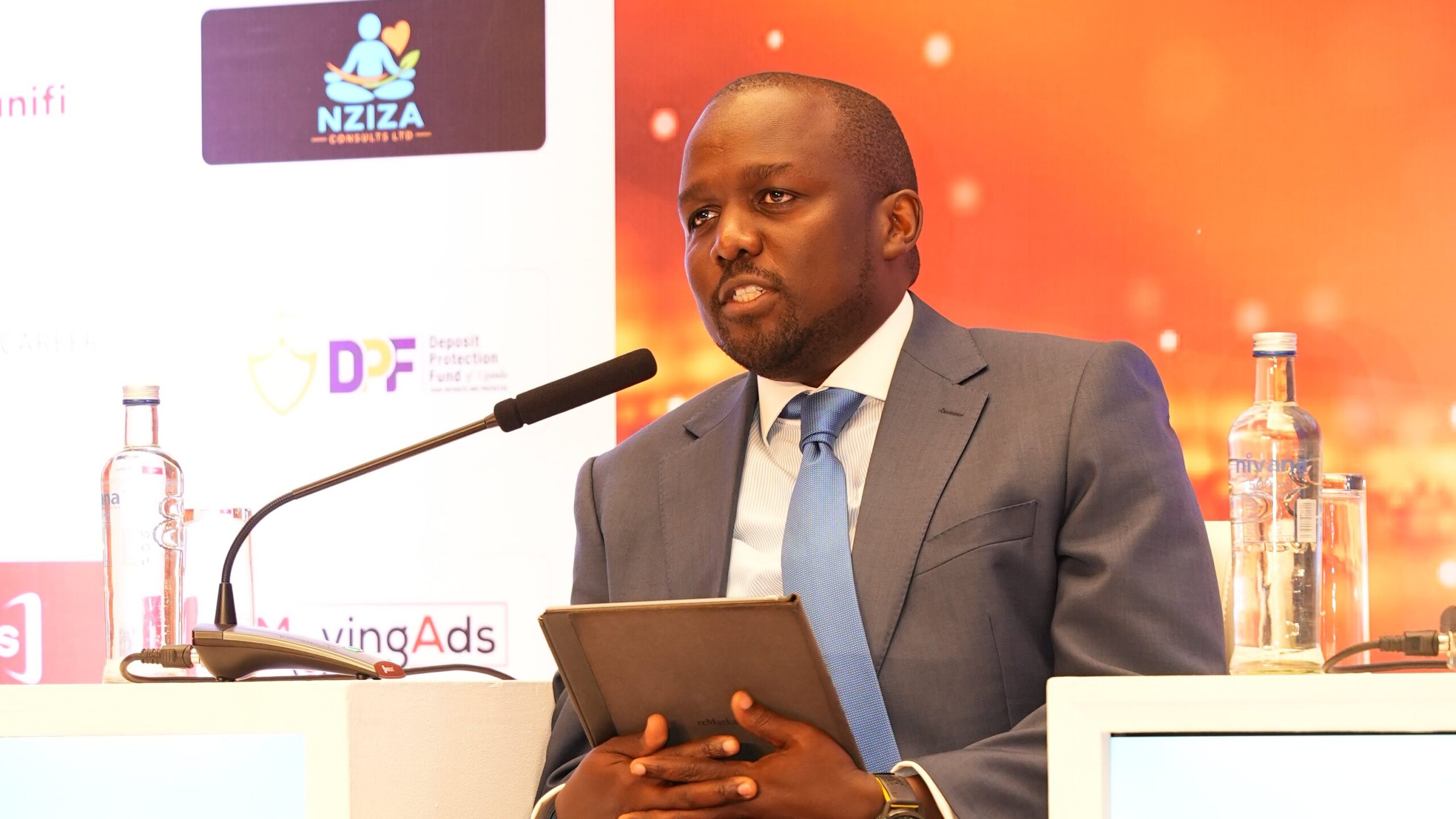
The panel featured Ambrose Kibuuka, Chief Executive Officer of ICEA LION General Insurance; Dr Ian Clarke, Chairman of Clarke Farm; Susan Nsibirwa, Managing Director of Nation Media Group Uganda; and David Wandera, Managing Director of Absa Bank Uganda.
Kibuuka emphasised that organisations must look beyond salaries and recognise employees as individuals whose personal circumstances, aspirations and wellbeing influence their performance.
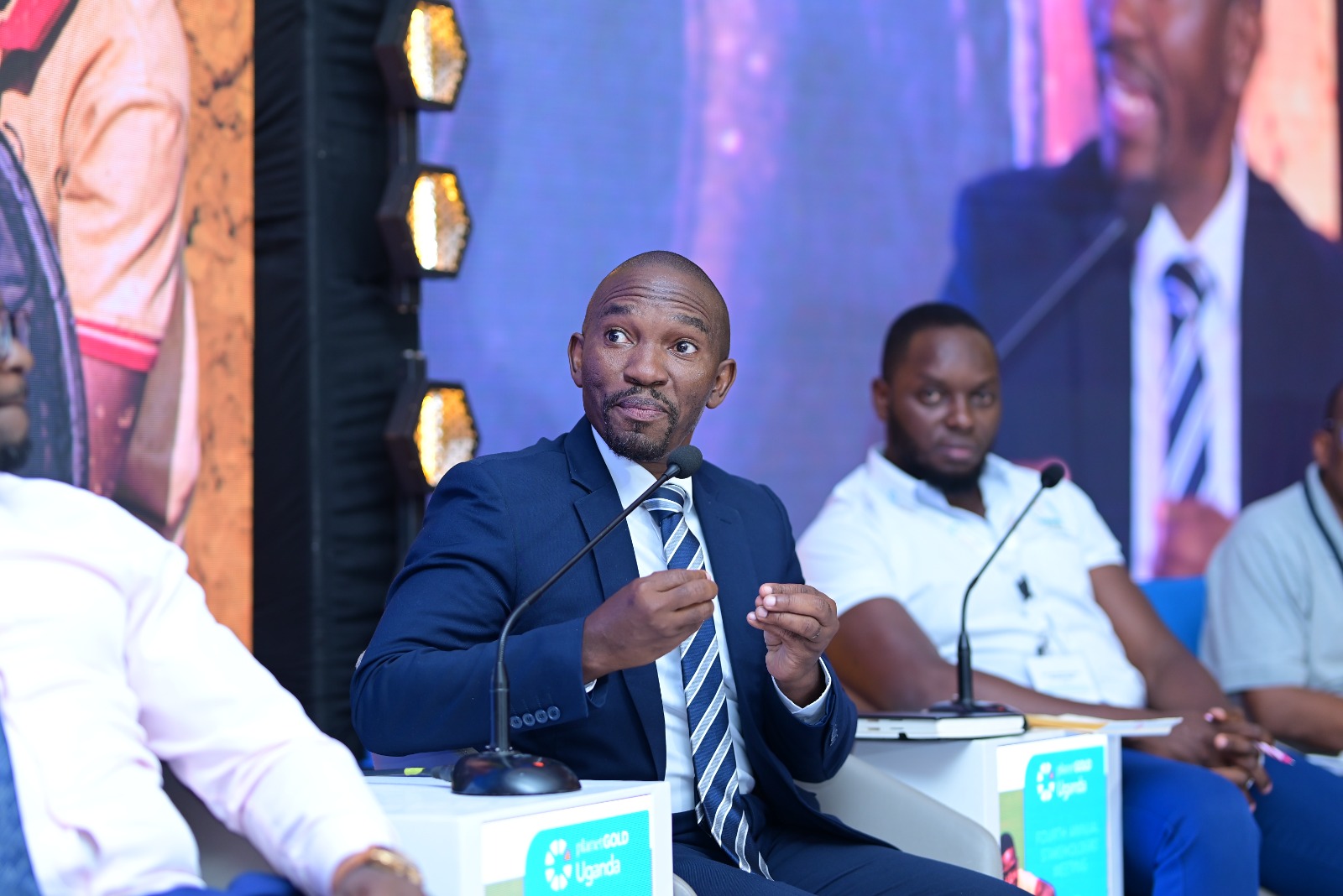
 CEO ICEA LION General Insurance Ambrose Kibbuka speaking during the panel discussion at the Thrid HR Conference 2026
He also highlighted the implications of AI adoption, noting that while technology can improve efficiency, businesses must prepare employees for changing roles through reskilling and redeployment.
At ICEA LION, for instance, an AI engine is being introduced to undertake the initial review of medical claims, with the capacity to process approximately 80 per cent of bills meeting the required parameters. The transition has prompted the organisation to assess employees’ existing capabilities and identify opportunities for them to take on new responsibilities.
“The question is, what skills do our people have, and what capacity should we be giving our people to collaborate with AI engines?” he said.
The discussion also highlighted the changing role of People and Culture departments, which are increasingly expected to contribute to business strategy beyond traditional administrative responsibilities.
Nsibirwa emphasised the importance of addressing mindset and investing in continuous training to support digital transformation, while Wandera noted that sustainable business growth must go hand in hand with economic and social development. Dr Clarke highlighted the importance of strong teams, mutual respect, and empowering employees to take responsibility.
The discussions reinforced the need for organisations to approach business transformation with people at the centre, ensuring that investments in technology and efficiency are matched by investments in employee development and wellbeing.
Ultimately, sustainable business growth depends not only on the systems and technologies organisations adopt, but also on the people equipped to make them work.










Leave a Reply