



By Helena Mayanja, Head Sustainability, dfcu Bank
At almost every business forum in Uganda, one complaint is repeated with remarkable consistency: banks are not lending enough to small businesses. Loans are too expensive, collateral requirements too demanding, and repayment terms too restrictive.
These concerns are legitimate. But they tell only half the story.
The more important question is what happens after a business receives financing. Does it become more productive? Does it employ more people? Does it become more competitive? Or does it simply accumulate more debt?
This is one of the important questions emerging from dfcu Bank’s recently launched inaugural Report to Society 2025, which examines the Bank’s contribution to Uganda’s economic, social and environmental development.
A central lesson from the report is that finance alone cannot transform an economy. It must be accompanied by the capacity to put that finance to productive use.
Uganda has set itself the ambitious target of growing its economy tenfold by 2040, driven by agro-industrialisation, tourism, mineral development, and science and technology innovation.
Achieving this transformation will require substantial investment. However, capital alone will not get us there.
Our greatest challenge is not simply financing businesses. It is building businesses worth financing.
Consider the typical small enterprise. Its owner may have a promising product, an established customer base and considerable entrepreneurial energy. Yet the business may lack proper financial records, formal governance structures, succession arrangements and reliable access to markets.
Additional credit may temporarily ease its problems without addressing the underlying weaknesses that prevent growth.
This explains why the conversation about enterprise development must extend beyond interest rates and collateral.
At dfcu Bank, our experience has reinforced the importance of combining finance with business development.
As highlighted in our Report to Society, in 2025 we financed 6,527 small and medium enterprises, with SME lending reaching UGX193 billion. Through our enterprise development programmes, more than 20,000 businesses benefited from training and financial support.
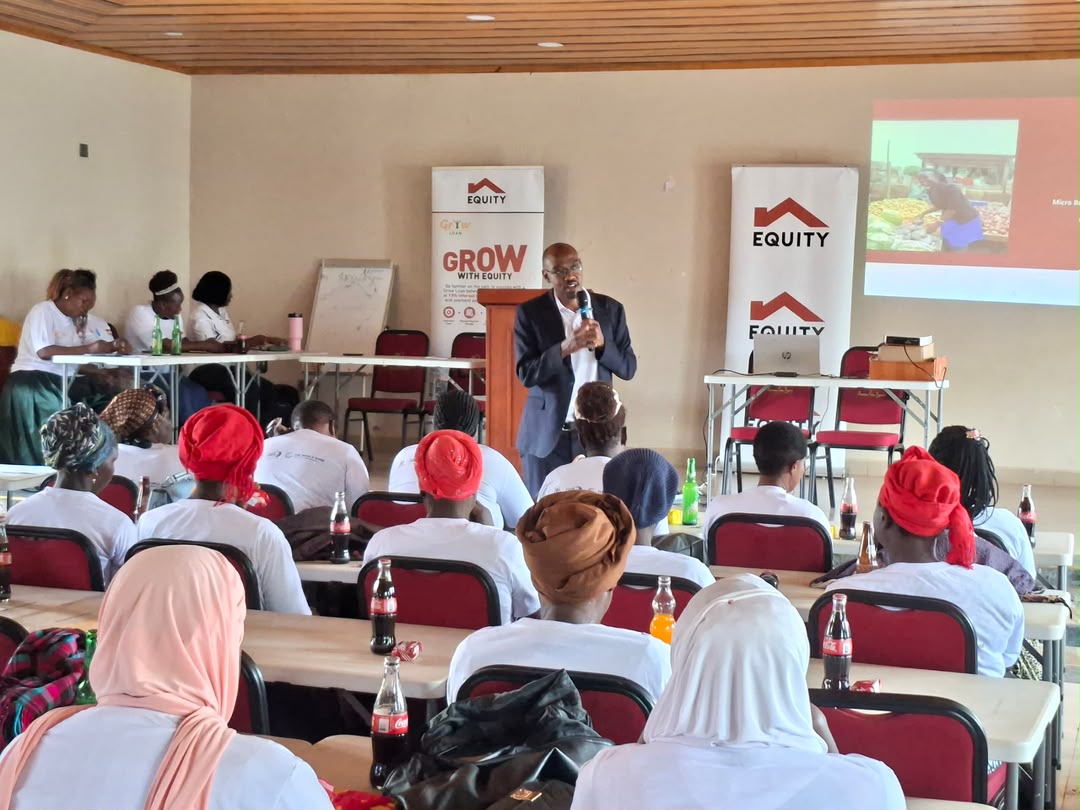
The training covered practical issues including debt management, digital marketing, organisational structures, regional expansion and succession planning.
These are not peripheral considerations. They determine whether an enterprise survives, grows or eventually fails.
Our experience has also demonstrated that traditional lending models need to evolve.
Through SME Mobi, which disburses more than UGX4 billion monthly, qualifying small enterprises can access unsecured working capital loans of up to UGX5 million.
Digital technology makes it possible to reach businesses that would previously have struggled to meet conventional banking requirements.
But even digital credit must be accompanied by financial discipline and the capacity to deploy borrowed funds productively.
There is another dimension to this challenge.
Many promising Ugandan businesses operate in what development financiers call the missing middle. They have grown beyond microfinance but are not sufficiently structured to access conventional commercial banking or investment capital.
Bridging this gap requires helping businesses formalise, meet regulatory requirements, improve governance and establish credible financial records.
This is the thinking behind the dfcu Foundation’s enterprise development programmes and its Catalytic Revolving Fund, designed to help businesses become commercially bankable.
The wider implications for Uganda are significant.
Banks must become better at understanding and supporting enterprise growth. Business owners must embrace financial discipline, professional management and transparency. Government and large corporations must create opportunities for smaller enterprises to participate in substantial supply chains.
And we must begin measuring success differently.
The number and value of loans disbursed are important. But these should not be the ultimate measures of development finance.
We should also ask how many businesses moved from informal to formal operations, how many expanded their markets, how many increased productivity, and how many became significant employers.
Uganda’s economic transformation will ultimately be delivered by productive enterprises, not by credit statistics.
Our objective should not merely be to create a nation of borrowers. It should be to create a nation of strong, competitive and investable businesses.
The Writer is Helena Mayanja, Head Sustainability, dfcu Bank













Leave a Reply