


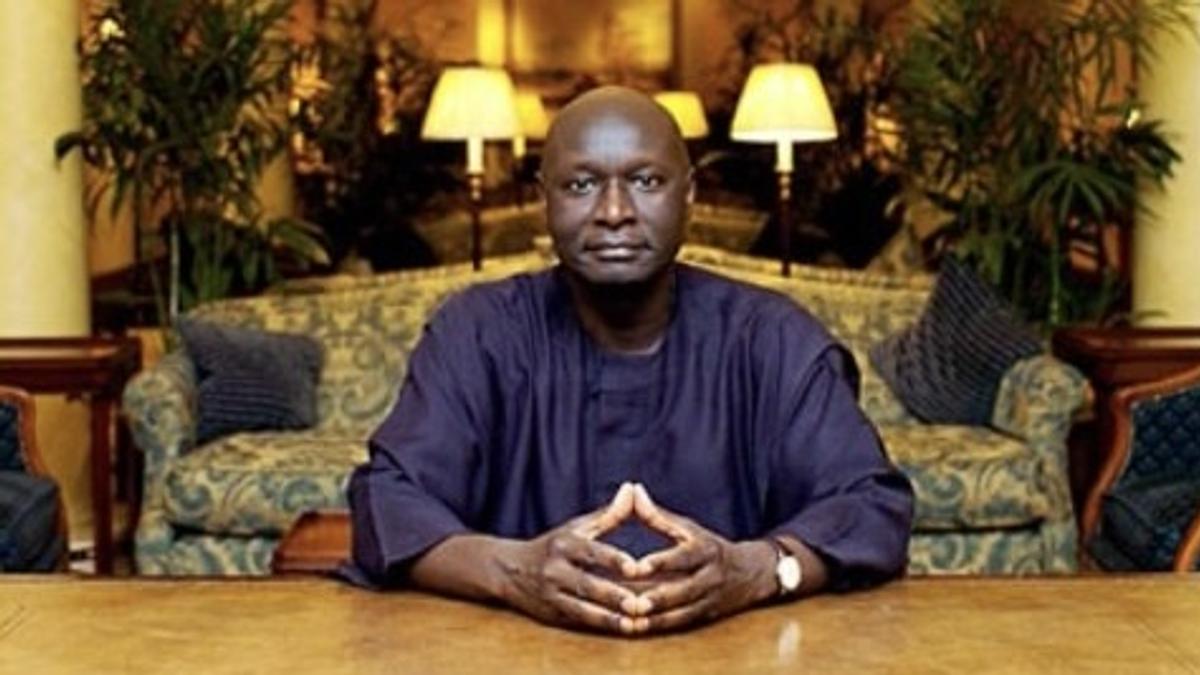
The Government of Uganda has formally endorsed veteran diplomat Ambassador Olara Otunnu as its candidate for the next United Nations Secretary-General, citing his extensive record in international diplomacy, peacebuilding and global governance spanning more than 40 years.
The nomination, announced in a statement issued on Sunday, July 26, 2026, by Permanent Secretary in the Ministry of Foreign Affairs Vincent Bagiire Waiswa, positions Otunnu as Uganda’s choice to succeed António Guterres, whose second term as UN Secretary-General ends on December 31, 2026.
According to the government, Otunnu’s distinguished service within the United Nations, combined with experience in Uganda’s government, academia and civil society, equips him with the leadership needed to guide the global body at a time of mounting international challenges.
Otunnu is best known for serving as the United Nations’ first Special Representative of the Secretary-General for Children and Armed Conflict from 1998 to 2005, holding the rank of Under-Secretary-General. During the administration of then Secretary-General Kofi Annan, he was among the most senior African officials at the UN Secretariat and played a leading role in advancing the protection of children affected by war.
His leadership helped establish the office as a key institution within the UN system, elevating children’s rights in conflict situations onto the agenda of the UN Security Council. He also oversaw the creation of the Monitoring and Reporting Mechanism on grave violations against children in armed conflict under Security Council Resolution 1612 (2005), which remains an important international accountability framework.
Before joining the UN Secretariat, Otunnu represented Uganda at the United Nations as Ambassador and Permanent Representative from 1980 to 1985. While serving as President of the UN Security Council in December 1981, he introduced the informal straw-ballot method for selecting the UN Secretary-General, a process later dubbed the “Otunnu Formula” and still used during Secretary-General selection today.
His public service in Uganda also includes a stint as Minister of Foreign Affairs between 1985 and 1986 and membership on the National Consultative Council during the country’s transition after the fall of Idi Amin.
Beyond government service, Otunnu has held several influential international positions. He served as President of the International Peace Academy, now the International Peace Institute, from 1990 to 1998, before taking up academic roles at Albany Law School, the American University in Paris and the Institut Français des Relations Internationales. More recently, he has co-led the Roco Paco peacebuilding initiative with retired Chief Justice Alfonse Owiny-Dollo, promoting reconciliation efforts in northern Uganda.
The government also highlighted Otunnu’s international recognition, noting that he has received prestigious honours including the Sydney Peace Prize, the German Africa Prize and the Harvard Law School Alumni Association Award.
“His unique blend of experience in the UN Secretariat, the Security Council, national government and grassroots peacebuilding makes him exceptionally qualified to lead the United Nations,” the statement said.
Uganda has appealed to all UN member states to support Otunnu’s candidature. He joins six other contenders seeking to replace Guterres. The selection process has already entered the public dialogue stage, with the UN Security Council expected to conduct a series of confidential straw polls before recommending a nominee to the General Assembly.
Born in Gulu District, northern Uganda, Otunnu studied law at Makerere University, where he served as Guild President. He later fled into exile during Idi Amin’s regime, continued his studies at Oxford University, graduating with a Bachelor of Arts in Jurisprudence, and subsequently earned a Master of Laws (LL.M.) from Harvard Law School.
After decades in international service, Otunnu returned home and entered elective politics. In 2010, he became president of the Uganda People’s Congress (UPC) and contested the 2011 presidential election on the party ticket. Although he did not win, his campaign focused on constitutionalism, national reconciliation, accountable governance and economic transformation, and was widely viewed as an effort to revitalize Uganda’s oldest political party through issue-based politics.









Leave a Reply