


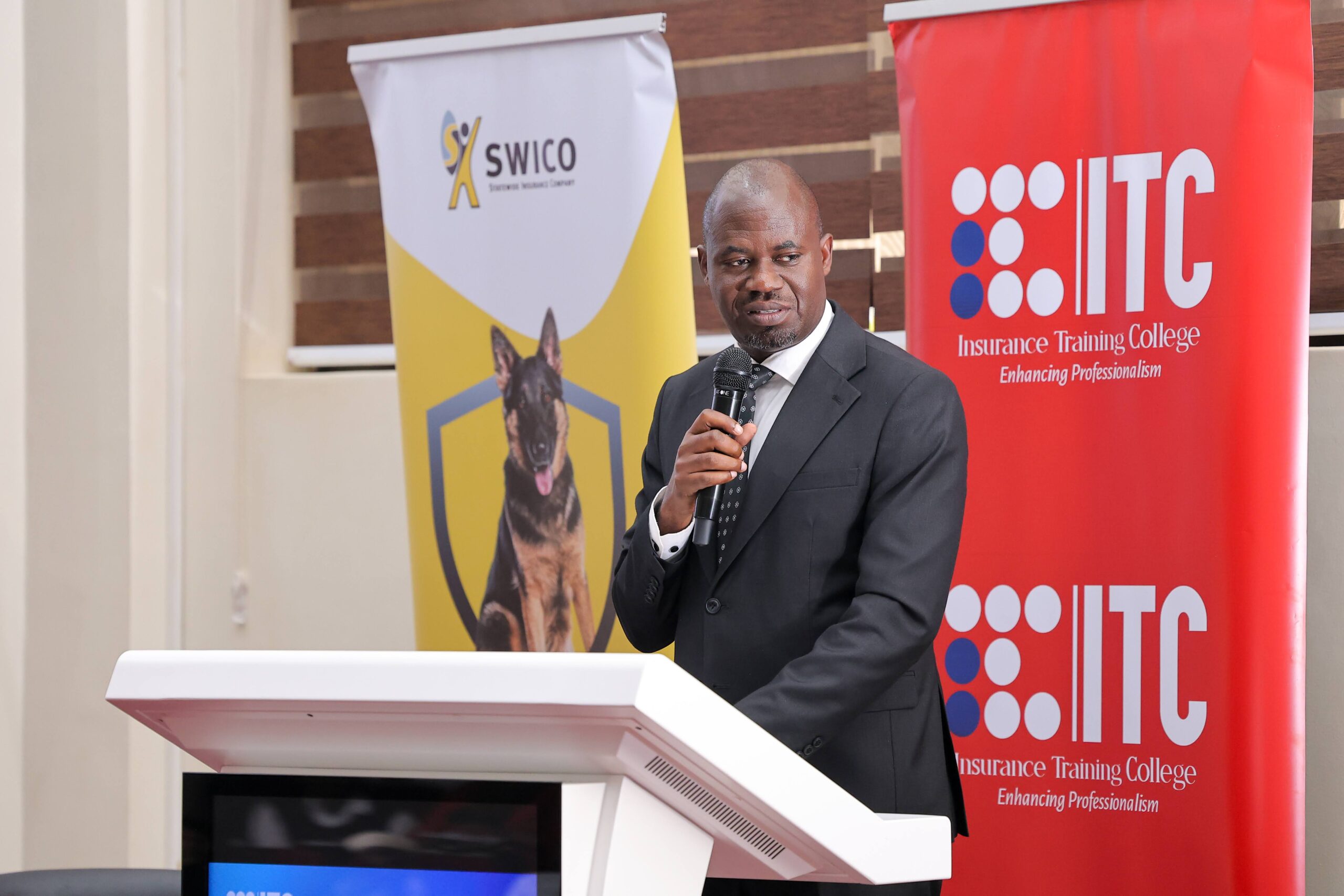
Sande Protazio, the acting chief executive officer of the Insurance Regulatory Authority of Uganda
Uganda’s economic growth risks being undermined by uninsured risks that leave households, businesses and public infrastructure exposed to heavy financial losses, Sande Protazio, the acting chief executive officer of the Insurance Regulatory Authority of Uganda, has warned.
Protazio called for insurance to be firmly integrated into government development programmes, business investments and household financial planning. He argued that unexpected events can wipe out years of savings and force taxpayers to shoulder the cost of rebuilding damaged public assets.
“Insurance is about protection. Insurance is about a shield against the consequences which are imposed when the unexpected event comes,” he said, during the 6th International Insurance Conference in Gulu City.
Uncertainty, he noted, affects everyone, including farmers, business owners, salaried workers and ordinary households. Without adequate protection, a single shock can destroy wealth accumulated over many years.
Life insurance, Protazio said, can help families maintain their financial plans when a breadwinner dies prematurely. For parents, this could mean ensuring children remain in school rather than relying on relatives to raise school fees after a death. Some life assurance products also provide benefits when the policyholder survives the agreed period, offering a way to prepare for the future while easing the burden on families.
The same logic applies to health insurance. Many Ugandans still pay medical bills directly from their pockets, leaving households vulnerable when illness strikes. Protazio called for universal health insurance coverage so that people can access essential care without being pushed into financial hardship. Under such a system, he said, those who can contribute would help support those with fewer resources, while wider coverage could also complement government spending on healthcare.
The case for insurance extends beyond households to public infrastructure and investment. Government raises revenue through taxes to build roads, hospitals and other assets. When disasters or accidents destroy these investments, taxpayers are often left to finance repairs. Insurance, Protazio argued, could provide an alternative source of recovery funding, reducing pressure on public budgets and freeing resources for other priorities.
“When public infrastructure or private enterprise suffers a loss without indemnity, the economic setback ripples across the entire financial ecosystem. Risk management must therefore form the bedrock of our national planning,” Protazio noted, emphasizing the macro-critical role of insurance in safeguarding public assets.
He called for risk management and insurance to be built into the planning of major public investments, including projects in agriculture, tourism, mining, science and technology. This, he said, would help protect national investments as Uganda pursues ambitious growth targets.
Despite the clear benefits, Protazio identified limited public appreciation of insurance as a major constraint to the sector’s growth. He argued that insurance should be treated as an essential economic investment alongside electricity, water and infrastructure, because unexpected events can undermine returns from all of them. He also urged greater attention to insurance in government contracts and development programmes, saying that protecting the activities that drive the economy would help expand coverage.
“We must move insurance from being perceived as a luxury for the few to an absolute necessity for every citizen, particularly those in the informal economy who are most vulnerable to sudden shocks,” Protazio stressed.
The challenge, he added, is not simply to sell more policies. It is to make risk protection part of how Ugandans save, invest, run businesses and plan public expenditure.
For households, insurance can preserve years of savings. For businesses, it can cushion the impact of unexpected losses. For government, it can protect public investments and ease the burden on taxpayers. Sustainable development, Protazio argued, requires a reliable way of managing risk. Without that protection, economic gains can quickly be lost when the unexpected happens.
The need for wider coverage has also featured in calls to advance Uganda’s proposed National Health Insurance Scheme, designed to shield households from the financial burden of illness.
Justice and Constitutional Affairs Minister Norbert Mao challenged insurance professionals to move beyond discussions and actively engage policymakers to advance Uganda’s proposed National Health Insurance Scheme (NHIS).
Mao said the insurance industry had the resources and technical capacity to help develop a scheme that could extend financial protection to ordinary Ugandans, but needed to engage more directly with Parliament and other government decision-makers.
“Ordinary citizens face severe financial constraints, whereas insurance institutions possess the capital, resources, and capacity. That is why the industry must take the helm and champion a national health insurance scheme that works for everyday Ugandans,” Mao said.
He urged insurance professionals to prepare clear, evidence-based proposals and lobby parliamentary committees and other relevant government institutions for the legislative and regulatory changes needed to expand health insurance coverage.
The proposed scheme is intended to address the financial burden faced by households that pay medical bills directly from their own pockets. For families without adequate health cover, serious illness can consume savings intended for school fees, business investment, housing and other essential needs, leaving them financially vulnerable.
Protazio reiterated that insurance should be viewed as a means of protecting wealth and preserving the progress households and businesses have made, rather than simply an additional expense. Extending health insurance coverage would support this objective by helping families meet healthcare costs without exhausting their savings or abandoning other financial commitments.
However, the challenge extends beyond healthcare to the wider question of how many Ugandans benefit from insurance as the economy grows.
At the conference, Insurance Training College chief executive officer Soul Sseremba said gross written premiums had exceeded Sh2 trillion, but a significant proportion of the population remained uninsured. He said the industry needed to translate its financial growth into broader public protection.
“Much as the premiums we collect have now exceeded Sh2 trillion, we still have a big opportunity because there are many people that have not yet been insured,” Sseremba said.
The gap is particularly important for people working in the informal economy, including boda-boda riders, market vendors and smallholder farmers, whose incomes and livelihoods can be disrupted by illness, accidents, crop losses and other unexpected events. Without suitable insurance products, such shocks can force households to use savings, sell productive assets or borrow to meet urgent expenses.
Prof. Abdul Hafiz Walusimbi, chairman of the ITC Governing Council, said the industry needed to assess its progress by looking beyond premium collections to the number of people and businesses receiving meaningful protection.
“Growth in premiums is not the same as growth in protection. The industry can report higher figures, but that does not mean more people are actually covered. Real progress is when ordinary Ugandans are protected against financial shocks,” Walusimbi said.
He said building public trust would require insurers to explain their products clearly, treat customers fairly and settle legitimate claims promptly.
He stressed the argument that insurance must become part of Uganda’s broader development planning. As households invest in education and businesses acquire assets, and government spends on infrastructure and public services, insurance can help reduce the financial consequences when unexpected events threaten those investments.














Leave a Reply