


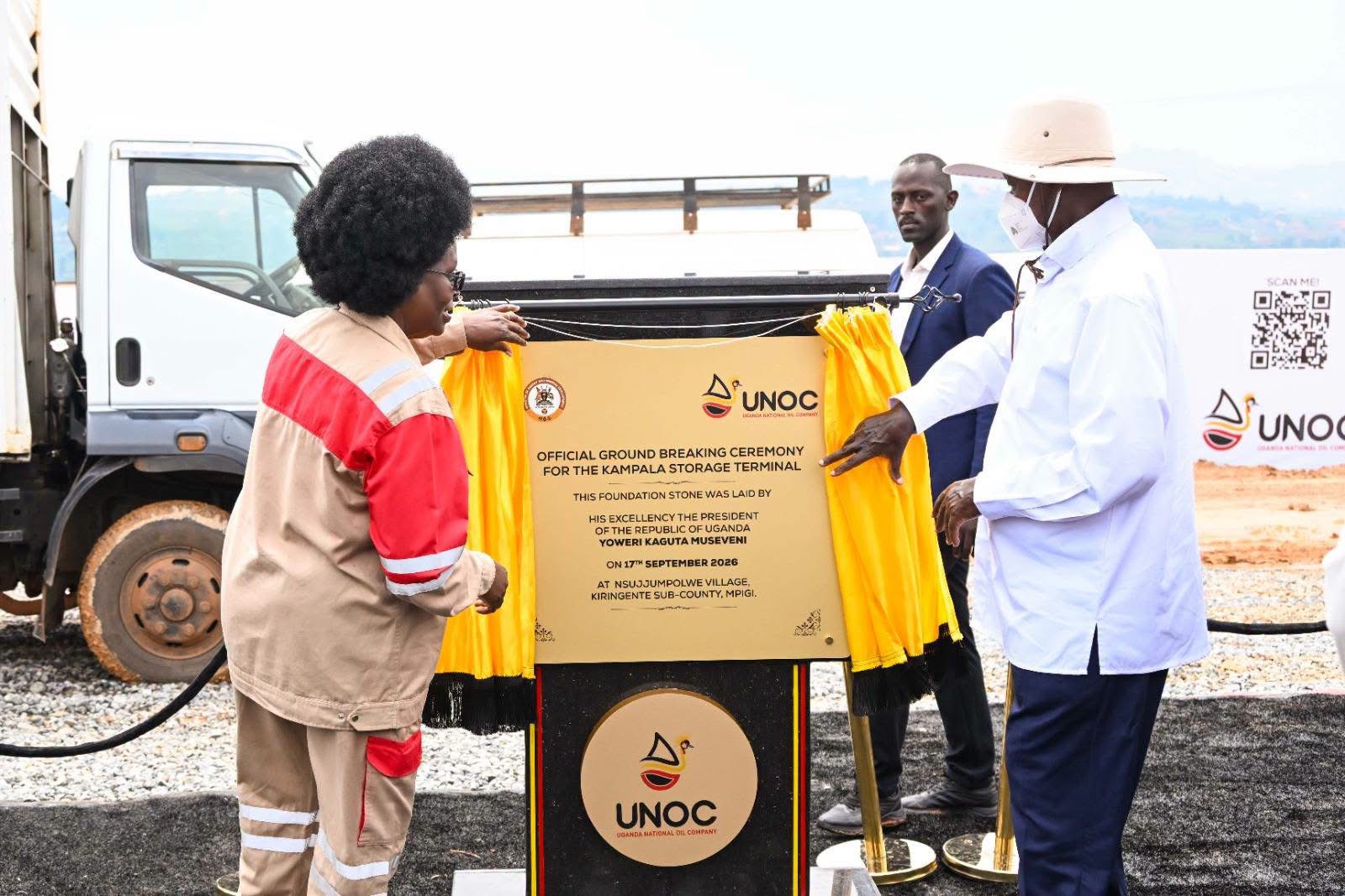
Museveni commissioning the construction of the oil terminal in Mpigi this Thursday morning
Uganda has started construction of a $250 million petroleum storage terminal in Mpigi District, a project expected to more than double the country’s fuel storage capacity and strengthen security of supply.
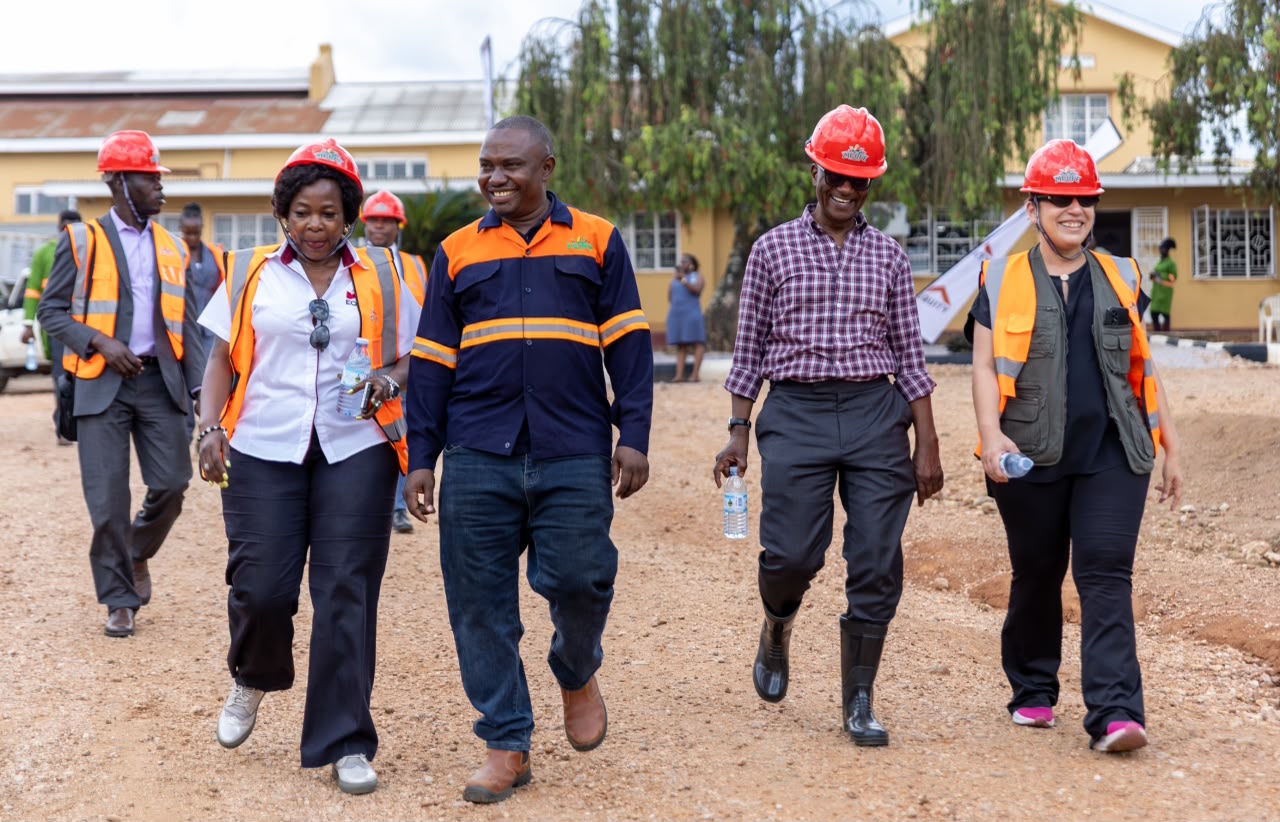
President Yoweri Museveni on Thursday presided over the groundbreaking ceremony for the 320-million-litre Kampala Storage Terminal, which is being developed by Uganda National Oil Company (UNOC) on 300 acres.
The facility is expected to increase Uganda’s petroleum storage capacity from about 160 million litres to nearly 480 million litres.
UNOC Chairman Mathias Katamba said the project is expected to be completed within 24 months from the September 18 contract start date.
He said detailed engineering is expected to be completed by March 2027, with commissioning targeted for September 2028.
“The expanded storage capacity will support the establishment of strategic national petroleum stocks and strengthen security of supply,” Katamba said.
The terminal is intended to provide strategic reserves that can cushion Uganda against supply disruptions while improving the distribution of petroleum products to the domestic and regional markets.
Uganda currently has about 160 million litres of petroleum storage capacity, including 30 million litres at Jinja, 70 million litres at Mahathi in Kawuku and about 60 million litres held by private fuel companies.
Energy Minister Monica Musenero said the government would support the project but called for better road infrastructure to connect the terminal to the Mpigi Expressway.
She also urged authorities to consider railway connectivity to ease the movement of petroleum products.
Permanent Secretary in the Ministry of Energy and Mineral Development Irene Batebe said the project would strengthen Uganda’s ability to maintain strategic fuel stocks and respond to disruptions in supply.
Government is also working to expand the Jinja storage terminal as part of efforts to increase the country’s petroleum storage capacity.
Vitol role
The storage project comes as UNOC continues to strengthen its role in Uganda’s petroleum supply chain.
Global energy trader Vitol has been supplying refined petroleum products to UNOC under an arrangement that has made it an important player in Uganda’s fuel-import system.
Museveni praised Vitol Bahrain for supplying petroleum products on credit, saying government pays the trader when funds become available.
He said government intervention in the fuel-import chain had also contributed to lower supply costs.
According to Museveni, the premium on diesel has fallen to $83 per metric tonne from $118, while that on petrol has dropped to $61.50 from $97.50. The aviation fuel premium has also declined to $79.25 from $114.25.
Uganda has been seeking to reduce its reliance on intermediaries in the importation of petroleum products through Kenya, with UNOC taking a more central role in importing and supplying fuel.
Vitol’s involvement has also expanded beyond refined fuel supplies. UNOC appointed the company to market Uganda’s crude oil, with the first exports expected once production begins from the country’s Lake Albert oil projects.
The trader is also involved in arrangements linked to Uganda’s petroleum infrastructure and regional supply chains, including plans involving Tanzania’s Tanga Port.
Preparing for oil production
The new storage terminal is part of Uganda’s preparations for increased petroleum activity as the country moves towards commercial oil production.
Uganda is developing the Tilenga and Kingfisher oil projects in the Lake Albert region and plans to export crude through the East African Crude Oil Pipeline to Tanzania’s Indian Ocean coast.
Museveni said Uganda would require more storage capacity as petroleum activities expand and cautioned that the Mpigi terminal should not be considered the country’s final storage solution.
“Now that we are moving well on developing our resources, we must plan for storage,” he said.
He also welcomed cooperation with Tanzania and other East African countries, including plans for Uganda to participate in the development of a larger refinery in Tanga.
The President also raised concerns about a garbage dumping site near the planned terminal and called for it to be relocated, citing potential safety risks associated with waste management near petroleum infrastructure.
The Mpigi terminal is therefore expected to become an important part of Uganda’s petroleum infrastructure, providing additional fuel reserves while supporting the country’s wider plans to develop its oil industry and strengthen regional petroleum trade.









Leave a Reply