


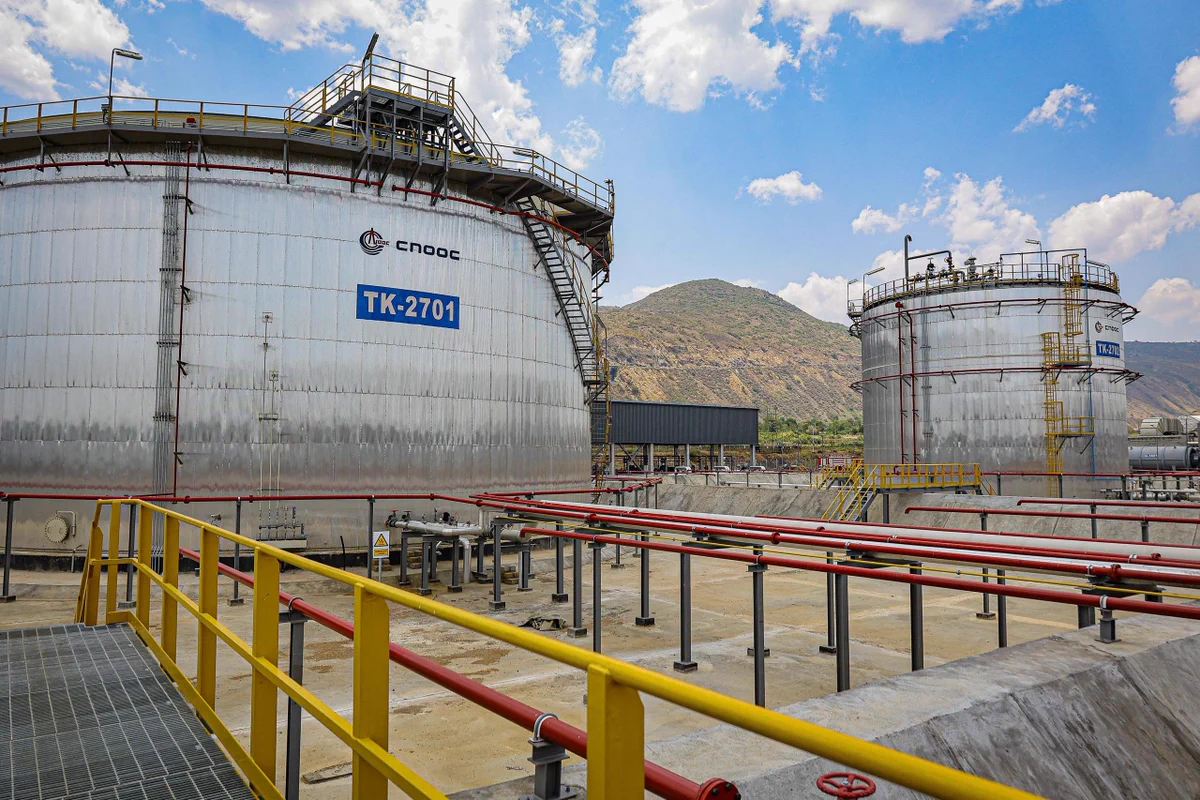
Uganda is seeking to unlock an estimated Shs114 billion ($30 million) in annual revenue from associated gas at the Kingfisher oilfield, as the government moves to convert a by-product of crude oil production into electricity rather than burn it off through flaring.
The planned investment will see gas produced alongside crude oil used to power an 80-megawatt electricity generation plant at the Kingfisher development in Buhuka, Kikuube District, creating an additional revenue stream from Uganda’s petroleum resources.
President Museveni announced the plan during a visit to the Kingfisher oil development in Buhuka, Kikuube District, saying Uganda had deliberately chosen to turn the associated gas into an economic resource.
“Here, we said no to flaring gas,” Museveni said. “We shall be using the gas to generate electricity, up to 80 megawatts at Kingfisher alone.”
The planned 80MW generation capacity would be significant for Uganda’s energy sector, representing nearly half of the 180MW output of the Nalubaale hydropower station in Jinja.
According to Museveni, the proposed power project could generate approximately $30 million (Shs114 billion) annually, although the actual revenues will depend on factors including the plant’s operating capacity, electricity tariffs, the availability of gas and power-purchase arrangements.
Associated gas is natural gas that occurs alongside crude oil in petroleum reservoirs. In many oil-producing countries, such gas has historically been burned off, or flared, when infrastructure to capture, process, transport or utilise it is unavailable.
Uganda, however, plans to use the resource to support electricity generation and reduce the environmental and economic costs associated with routine gas flaring.
Beyond power generation, part of the gas from the Kingfisher oilfield is expected to be processed into liquefied petroleum gas (LPG) for domestic cooking.
“The other gas will be condensed and turned into liquefied petroleum gas for cooking,” Museveni said.
The plan is part of Uganda’s broader strategy to maximise value from its petroleum resources as the country prepares for commercial oil production.
Uganda has discovered an estimated 500 billion cubic feet of natural gas, alongside approximately 6.5 billion barrels of petroleum resources. Of these petroleum resources, about 1.4 billion barrels are currently considered recoverable.
The utilisation of associated gas for electricity and cooking is expected to create additional value from Uganda’s oil resources while supporting the country’s energy needs and reducing reliance on gas flaring.
The Kingfisher development, located in the Albertine Graben, is one of Uganda’s major oil projects and is expected to play a central role in the country’s transition into commercial oil production.













Leave a Reply