



Watu Uganda has financed more than one million smartphones in the country in three years, a milestone the asset-financing company says could help accelerate digital inclusion as smartphone ownership remains relatively low.
The achievement, announced in Kampala, marks a significant expansion of Watu’s operations since it entered the Ugandan market in 2019 with motorcycle financing.
Damien Gueroult, Watu’s country manager, said the milestone had transformed the company’s business from one focused largely on boda boda financing into a broader asset-financing platform.
“For us, it represents a successful addition of a new business model. We have moved from being a boda financing player to a financing player for goods that are important to Ugandans,” Gueroult said.
He said the milestone was also significant for Uganda, where smartphone penetration remains at about 35%.
“Our contribution is to make Uganda a more digital country by giving more Ugandans access to smartphones and the internet,” he said.
The company attributes the growth of smartphone financing to a combination of factors, including expanding telecommunications coverage, mobile money services, regulation and the growth of local businesses involved in mobile phone distribution.
Gueroult said the company had relied heavily on local dealers to reach customers across the country, particularly in areas where access to formal financial services and affordable smartphones remains limited.
“Our dealer partners are crucial. They know the terrain, they are often from the communities where they operate, and they help us reach places we could not have reached as quickly on our own,” he said.
The company said it does not purchase smartphones for resale but works with local phone dealers who identify customers interested in acquiring devices through financing.
Under the model, customers make an initial deposit and pay the balance in instalments. The payments can be made daily, weekly or monthly.
If a customer stops paying, the financed smartphone is temporarily locked. Once payments resume, the device is unlocked, allowing the customer to continue using it without necessarily having to clear the entire outstanding balance at once.
Andrii Volokha, Watu’s general manager for Eastern Africa, said the model was designed to provide flexibility while helping bridge Uganda’s digital access gap.
“You pay instalments and use the phone. If you stop paying, the phone is locked, but once you start paying again, it is unlocked,” Volokha said.
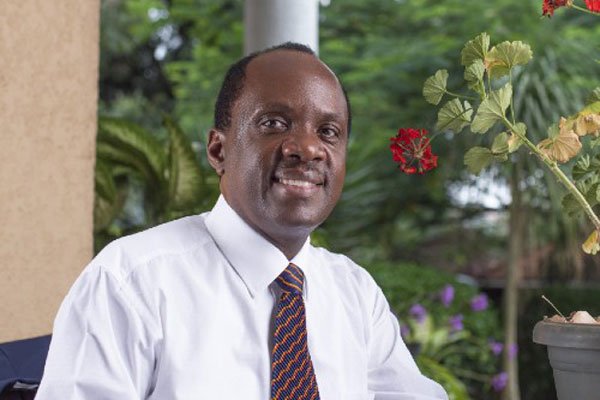
 Andrii Volokha, Watu’s general manager for Eastern Africa
He said the arrangement had helped customers access digital tools that can improve productivity and create new income opportunities.
“With a smartphone, people can access digital payment solutions, start businesses online and reach more customers. This can make them more productive and help them earn more,” he said.
Watu said the demand for smartphone financing has remained strong despite economic pressures and rising prices of mobile devices.
Gueroult said economic challenges could actually increase the need for asset financing because many consumers are unable to pay for expensive items in cash.
“When people are under economic pressure, they are less able to pay for assets in cash. That is when friendly asset financing becomes even more important,” he said.
He added that customers with a good repayment history can receive better pricing when they return for additional financing.
The company said its smartphone financing customers cut across different demographic groups, including young people, women, older customers, entrepreneurs and small business operators.
However, Watu said it still has significant room to expand its reach, particularly in northern and western Uganda.
Gueroult said the company had expanded rapidly in central and eastern Uganda but was now focusing more attention on the west and north, where access to smartphones and digital services remains a challenge in some communities.
“Naturally, the farther you move from Kampala, access becomes more difficult. We are now starting to scale in the west and north, but there is still a lot of room to grow,” he said.
The company said smartphone financing also contributes to Uganda’s wider digital economy by enabling more people to participate in online commerce, communication and digital financial services.
Volokha said the impact extends beyond the individual customer because smartphones can help businesses reach wider markets and provide services to their communities.
Watu said its contribution to the economy also includes direct and indirect employment.
The company employs more than 800 people in Uganda, while its broader financing ecosystem supports dealers, sales agents, mechanics, fuel suppliers, delivery businesses and other service providers.
Volokha said financing productive assets can create a ripple effect across the economy.
“When someone gets a motorcycle, they can become a rider or delivery operator, while the ecosystem around repairs, fuel and other services also creates jobs,” he said.
“With smartphones, people can reach more customers through social media and messaging platforms and deliver better services to their communities.”
Watu also finances motorcycles and other productive assets and has introduced electric motorcycles in Uganda.
The company said it is developing additional products based on feedback from customers and intends to expand its portfolio as demand for affordable financing grows.
The firm said its ambition is to reach millions more Ugandans in the coming years.
“Our ambition is to reach every customer in Uganda who wants a smartphone or another productive asset,” Volokha said.
However, the company acknowledged that expanding digital inclusion cannot be achieved by one business alone.
Volokha said continued investment in telecommunications infrastructure, affordable internet, supportive regulation and partnerships with local businesses would be critical to expanding digital access.
“We cannot do it alone. Digital inclusion is a joint responsibility involving telecom companies, regulators, dealers and other partners,” he said.
The one-million-smartphone milestone comes as Uganda continues to pursue digital transformation, with smartphones increasingly becoming essential tools for communication, business, digital payments, education and access to information.
For Watu, the company said, the next phase will focus on reaching more customers outside major urban centres and ensuring that financing remains accessible to people who would otherwise struggle to acquire smartphones and other productive assets.









Leave a Reply