



Uganda’s growing number of road crashes is threatening the ability of commercial bus operators to secure affordable insurance, with insurers warning that repeated losses are pushing the sector towards becoming increasingly difficult to insure.
Liberty General Insurance Uganda says transport operators who fail to improve driver management, vehicle maintenance and other safety practices could face higher premiums or difficulty obtaining cover as insurers seek to control rising claims.
Paul Kavuma, Acting Managing Director and Country Head of Operations at Liberty General Insurance Uganda, said the situation was already becoming a challenge for some vehicle owners.
“Your risks are becoming uninsurable. Not for anything else, but because of the repeated road damage,” Kavuma said.
He said insurers are businesses that must remain financially sustainable, arguing that persistent crashes increase loss ratios and eventually force premiums upwards.
“If you’re paying 100 million in premium and the insurer is paying you back 10 million, that means your loss ratio is favourable,” Kavuma said, explaining that operators with better safety records could negotiate for lower premiums.
Kavuma made the remarks during the launch of SMART Journeys, a Liberty initiative that brings together government, police, transport operators, insurers, financiers and other stakeholders to shift Uganda’s approach from responding to crashes after they happen to preventing them.
The initiative focuses on safe speed, vehicle maintenance, alert drivers, responsible loading and transportation management.
Kavuma said Liberty wants safety measures to become part of the conditions under which commercial vehicles are insured.
“We want your commitment as bus owners, as bus drivers association, with the endorsement of the Ministry of Works, and of course with the backing of our regulator, that these warranties are actually respected,” he said.
The company is proposing measures including driver training and vetting, journey planning, vehicle inspections, GPS monitoring, speed control, regular maintenance and incident reporting.
Kavuma said Liberty is also prepared to provide free defensive-driving training to bus operators as part of efforts to reduce the risks that drive up insurance costs.
Government backs safety-linked insurance
Apollo Kashanku, Assistant Commissioner for Transport Regulation and Safety at the Ministry of Works and Transport, backed the move to link safety performance with insurance and transport financing.
He said Uganda’s road crashes are now a major threat to families and the economy, with an average of 15 people losing their lives every day on the country’s roads.
“The figures that we talk about here, the statistics, are not statistics anymore. They are a tragedy,” Kashanku said.
He urged insurers to examine the safety history of both the transport company and its drivers before providing cover.
“Before you insure that bus, check the history of the company,” he said. “Before you insure that bus, check the license of that driver.”
Kashanku also challenged banks financing buses to consider safety records before extending loans for fleet expansion.
“Before a bank expands funds or a new fleet expansion, verify that the operator has a certified driver training program,” he said.
He said safer operators should ultimately benefit from lower insurance costs because reduced crashes mean lower claims and a lower risk profile.
Police: Prevention must come before enforcement
SP Michael Kananura, Community Liaison Officer for Traffic and Road Safety, said police also wants to move from dealing with motorists after crashes to preventing the crashes in the first place.
“As traffic police, our concern is not to simply apprehend drivers after these crashes have occurred, but our greater objective is to prevent crashes before they can occur, and then we save lives,” Kananura said.
He identified speeding, driver fatigue, improper overtaking and poor vehicle condition among the major risks affecting commercial transport.
Kananura said information held by police, insurers, financiers and transport companies should be combined to identify dangerous drivers and operators before they cause crashes.
“If we responsibly combine all these perspectives, we can move from reacting to these crashes to predicting and thereby preventing these risks,” he said.
IRA warns insurance is not a substitute for safety
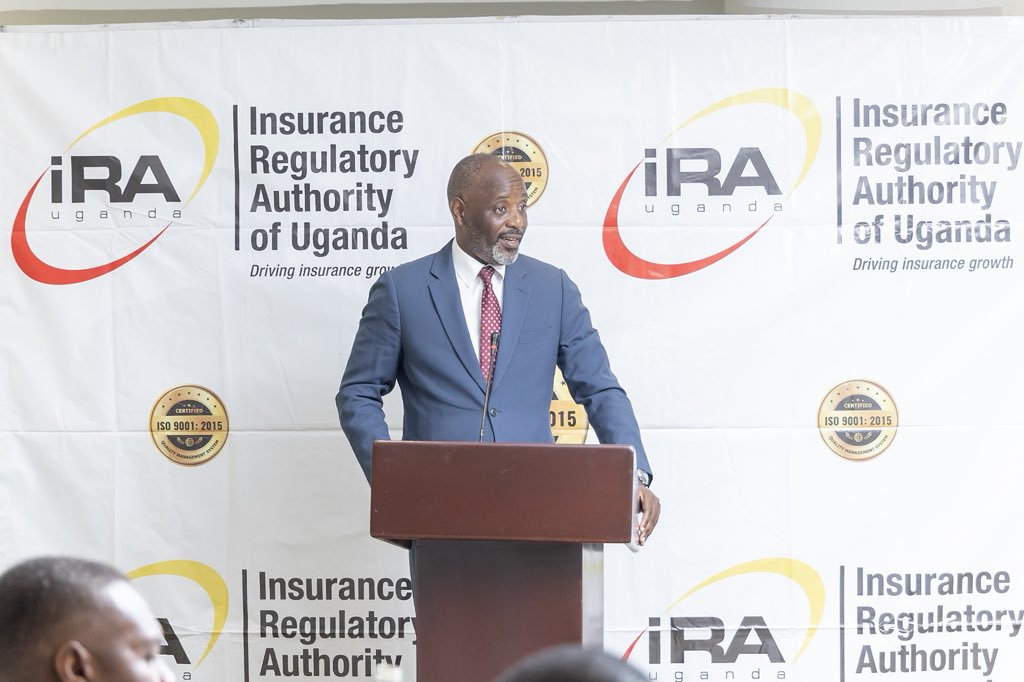
Bernard Obel, Director Operations at the Insurance Regulatory Authority, said transport operators should not rely on insurance as a solution after accidents occur.
“Insurance should never become a substitute for good risk management,” Obel said.
He called for greater use of GPS tracking and telematics to monitor driver behaviour, speed and other risk factors.
Obel said insurers should use claims data and risk assessments to help transport operators prevent accidents instead of merely compensating them after losses occur.
“Every preventable accident avoided represents lives saved, injuries prevented, families protected, businesses preserved, and pressure on our health and emergency services,” he said.
The Uganda Police Annual Crime Report 2025 recorded 26,044 road crashes, including 4,602 fatal crashes, while traffic-related offences stood at 322,441.
Umar Kakaire, National Chairman of Uganda Bus Drivers, meanwhile called for drivers to be directly involved in designing road safety measures, arguing that they understand the challenges on the road better than most stakeholders.
“Anything meant for us without us can’t be for us,” Kakayire said.
The SMART Journeys initiative is being launched during Customer Service Week under the theme “Going the Extra Mile,” with Liberty saying that protecting customers should go beyond settling claims to helping them prevent losses in the first place.















Leave a Reply