


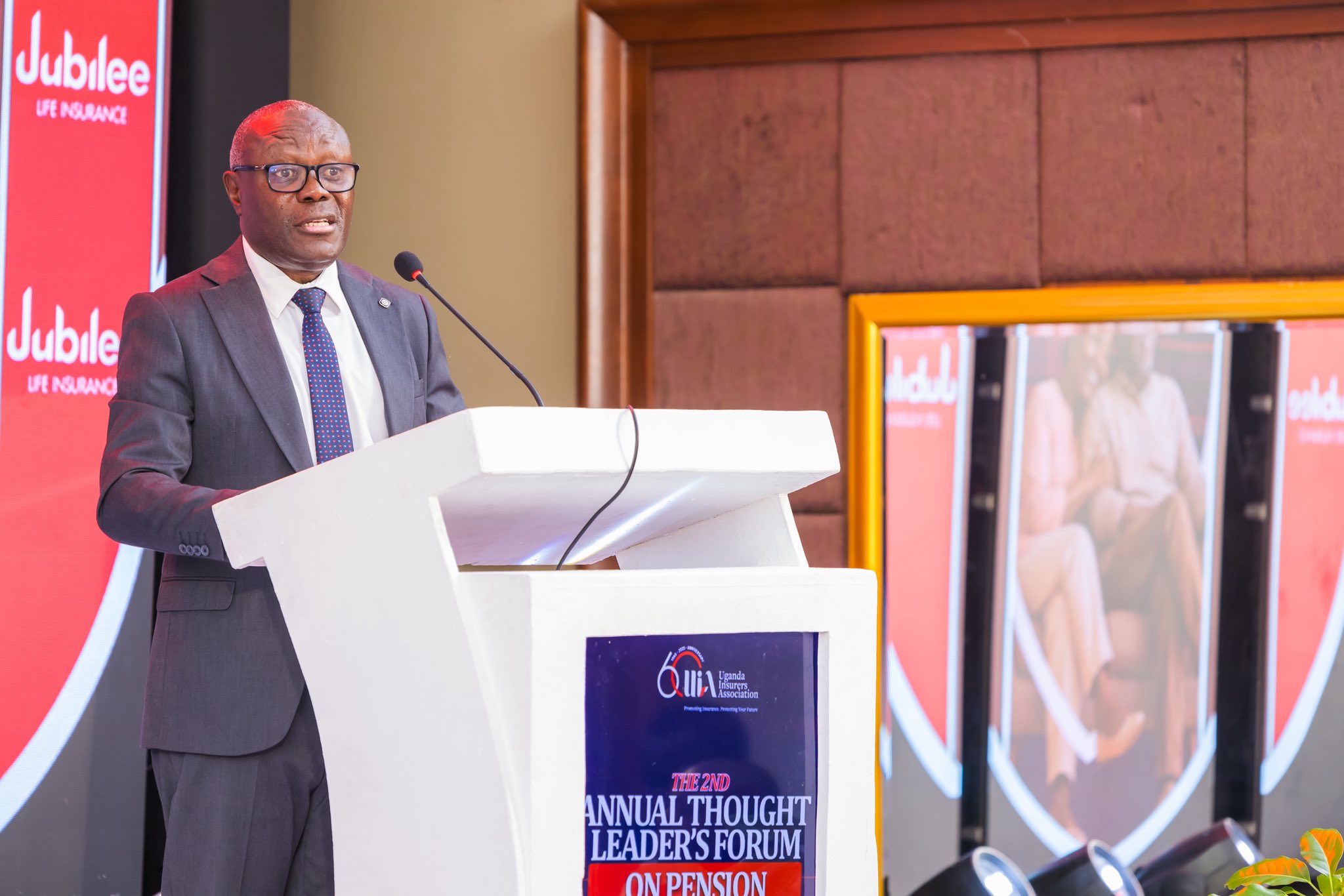
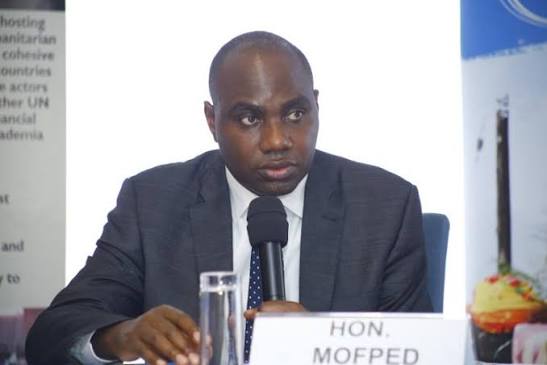
CEO of the Uganda Retirement Benefits Regulatory Authority –Martin Anthony Nsubuga during the 2nd Annual Thought Leaders’ Forum on Pension
Uganda’s retirement benefits system has long relied on a rigid premise involving secure desk jobs, fixed monthly paycheques, and predictable career paths.
But as the national economy diversifies and millions of Ugandans forge livelihoods through agriculture, micro-enterprises, casual labour, self-employment, and the fast-growing gig economy, that rigid traditional model is struggling to keep pace with the modern realities of how people earn and sustain their daily bread.
Out of an estimated 26 million people comprising Uganda’s total working population, a stark minority of only about four million individuals are currently captured by structured, formal retirement arrangements.
This leaves the vast majority stranded outside the conventional social security architecture. These uncovered citizens include smallholder farmers, market vendors, boda boda riders, roadside traders, domestic workers, and independent freelancers whose cash flows fluctuate wildly from one day, week, or season to the next.
Financial sector regulators, insurance industry executives, and pension administrators are increasingly sounding the alarm, calling for a fundamental, structural rethink of how the nation saves for old age.
Experts argue that Uganda can no longer build a resilient, sustainable retirement ecosystem by relying almost exclusively on the narrow slice of the population anchored in formal, salaried employment.
Addressing delegates at the Uganda Insurance Association (UIA) Leaders Forum in Kampala, Andrew Mwangi, Head of Business at Zamara Actuaries, Administrators and Consultants, said the true strength of the retirement sector should no longer be gauged by the sheer size of institutional asset portfolios. Instead, he argued, success must be anchored in mass inclusion.

“The success of our sector cannot be measured simply by how much money sits within our portfolios. It must be measured by how many Ugandans are inside the system, saving consistently and confidently, and what they are building for their lives,” Mwangi said.
He said pension schemes demand rigid, monthly contributions that assume a steady cash flow—an operational luxury that the average informal worker simply does not possess.
The Director of Supervision at the Insurance Regulatory Authority (IRA), Benard Obel, noted that the conventional pension model was inherently engineered for a predictable workforce.
“That conventional means that we have had again and again in this room assumes a stable employer and a regular salary,” Obel observed.
Yet, the macroeconomic reality on the ground tells a radically different story. For a smallholder farmer in districts like Mukono or Luweero, household income arrives cyclically, tethered entirely to the harvest seasons.
A downtown market vendor in Kampala may generate liquid cash every single day yet operate with zero guarantees regarding future margins or emergency reserves.
Obel stressed that retirement products must urgently evolve to mirror the natural rhythms of how ordinary Ugandans earn, spend, and manage risk.
This, he stressed, requires institutional flexibility, such as permitting contributors to deposit micro-savings daily, weekly, monthly, or seasonally, aligning deposits directly with real-time cash flow. For an informal earner, the option to deposit Sh5,000 or Sh10,000 whenever a surplus arises is far more sustainable than facing penalties or default notices for missing a fixed monthly obligation.
“The innovation must solve real problems,” Obel emphasized, pointing out that financial products must be intuitive, frictionless, and empathetic to the economic vulnerability of the informal sector.
Simultaneously, the push to widen coverage is unfolding alongside structural shifts within formal public administration. Uganda is actively preparing to roll out sweeping reforms to the public service pension system, a move designed to modernize state-backed retirement administration and build deeper institutional capital reserves.
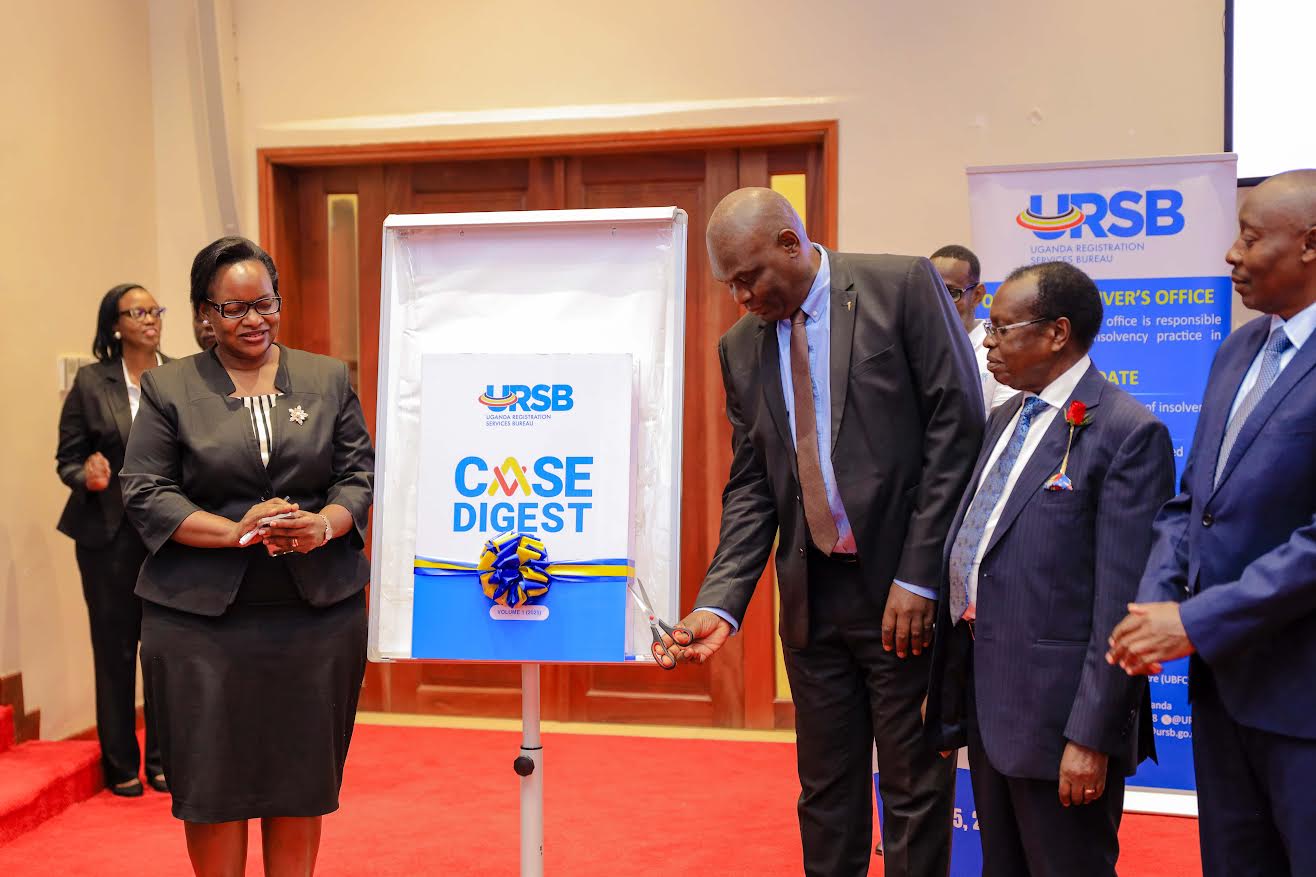
Representing Public Service Minister, Gen. (Rtd) Katumba Wamala at the forum, Bua Victor Leku, a Commissioner in the Ministry of Public Service, revealed that the reformed public service pension scheme will transition from the current unfunded pay-as-you-go arrangement into a fully funded, contributory defined-benefit framework.
 Bua Victor Leku, a Commissioner in the Ministry of Public Service
Under this upcoming model, the government will contribute 15% of pensionable earnings, while public servants will contribute 10%.
This landmark reform is projected to encompass approximately 365,000 public officers, generating a substantial pool of long-term domestic savings capable of driving national infrastructural development and capital market expansion. The transition is slated to take formal effect on July 1, 2027.
However, industry veterans caution that simply accumulating larger asset pools is only half the battle. Ensuring that retirees enjoy secure, dignified livelihoods long after they exit the active workforce is an equally critical frontier that requires urgent policy re-engineering.
Patrick Kimathi, Managing Director, Old Mutual Life Assurance, argued that Uganda’s financial sector must radically rethink the decumulation phase—the period when workers begin drawing down their savings.
The traditional mindset has historically focused on building a large lump-sum balance at the point of retirement, a practice Kimathi warns can leave retirees dangerously exposed.
“The question for us is how do we move from an account of accumulating money to an account of securing income?” Kimathi asked the forum. He cautioned that massive lump-sum payouts often trigger immediate, unplanned consumption, leaving aging individuals destitute within a remarkably short window.
“If you get a lump sum amount of money at retirement, people do everything they can do. They enjoy life while the money is there, but for a very short period, you don’t remember if this money was for retirement,” Kimathi noted.
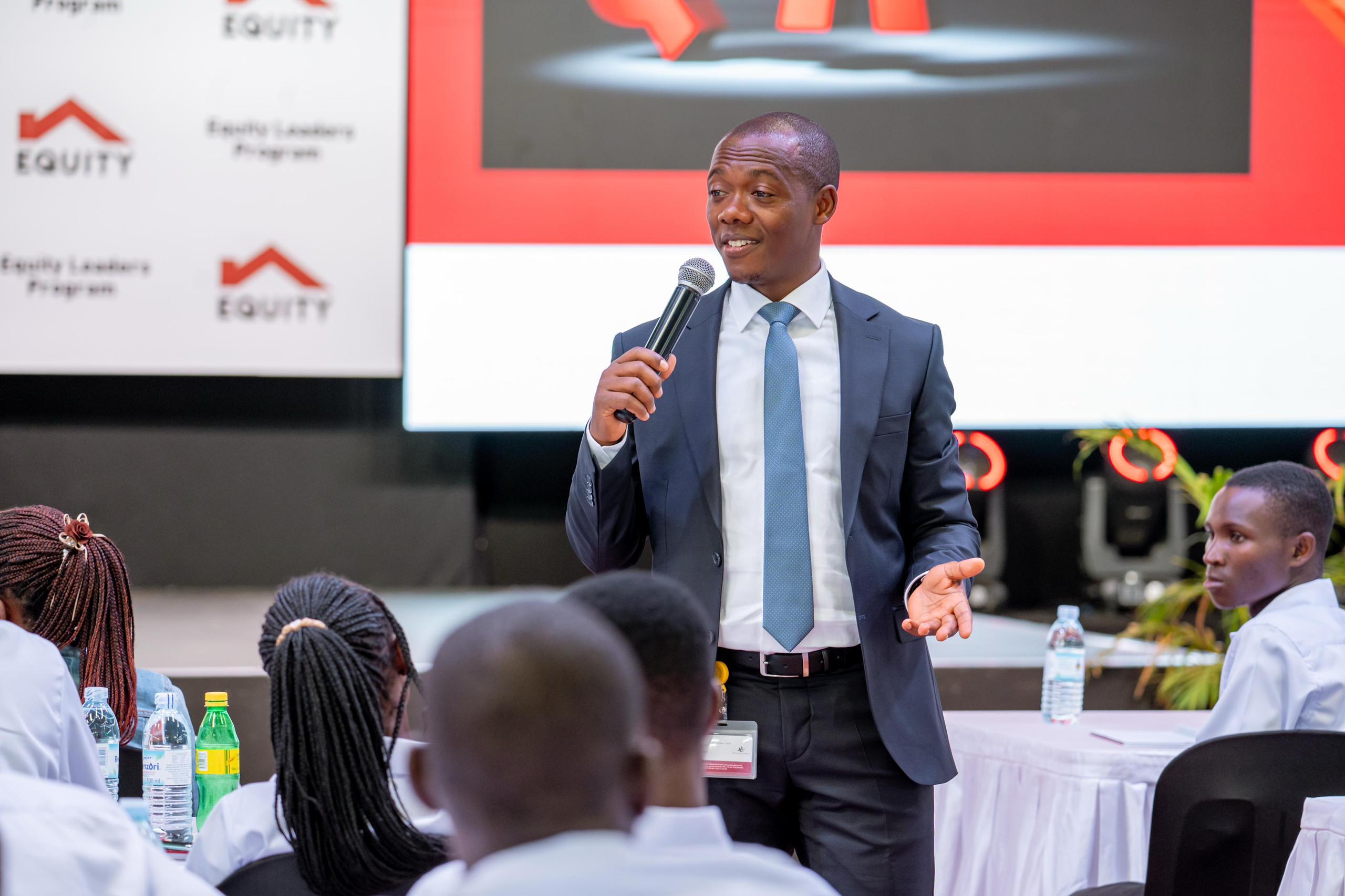
 Patrick Kimathi, Managing Director, Old Mutual Life Assurance
To mitigate this risk, Kimathi advocated for the wider adoption of structured financial instruments such as annuities and income-drawdown arrangements. These products guarantee steady, recurring payouts over an individual’s remaining lifespan, shielding them from the harsh reality of outliving their savings.
Without such safeguards, retirees risk exhausting their capital reserves prematurely, leaving them heavily dependent on strained family networks or public safety nets.
Industry leaders universally agreed that digital infrastructure will serve as the primary bridge connecting informal workers to formal social security systems.
Martin Nsubuga, the chief executive officer of the Uganda Retirement Benefits Regulatory Authority (URBRA), said legacy pension administration frameworks are structurally incapable of serving the informal populace on their own.
“The traditional pension structure was largely designed around formal workers. This model cannot on its own meet the needs of the boda boda rider, the market vendor, the farmer, the domestic worker, and the small trader,” Nsubuga said.
To bridge this gap, pension administrators are looking toward mobile money platforms, telecom-backed fintech applications, Savings and Credit Cooperative Organizations (SACCOs), and agency banking networks.
These decentralized channels enable micro-savers to make seamless contributions straight from their mobile wallets without needing to visit brick-and-mortar financial institutions or handle cumbersome paperwork.
By drastically lowering transaction costs and streamlining collection processes, digital integration transforms retirement savings from an elite, salaried privilege into an accessible, everyday financial habit.
Nevertheless, regulatory authorities remain mindful of consumer protection risks in the digital age. Obel cautioned that expanding digital access must be paired with robust safeguards, financial literacy, and genuine consumer value.
Beyond individual financial security, expanding the retirement savings net carries profound macroeconomic implications for Uganda’s broader development agenda.
Deepening pension coverage generates a reliable pool of domestic, patient capital that can be strategically deployed into long-term infrastructure projects, affordable housing initiatives, municipal bonds, and productive enterprise sectors.
According to Mwangi, the architectural integrity of a financial system depends entirely on the breadth of its base. “The foundation that is deep cannot be held to carry the weight of a nation if it is not broad enough,” he noted.
For a nation whose economic heartbeat is increasingly driven by informal entrepreneurship, casual enterprise, and multifaceted income streams, the next chapter of pension development demands uncompromising flexibility, technological integration, and sustained mass participation.
The ultimate challenge facing Uganda’s financial architects is no longer merely how to grow institutional funds, but how to make retirement security deeply relevant to the millions of citizens whose daily labor defies the traditional nine-to-five framework.
UIA chief executive officer Jonan Kisakye said the industry’s long-term growth will depend on its ability to develop products and services that respond to the changing needs of Ugandans, particularly those working outside the formal economy.
Kisakye said the country’s expanding informal sector presents both a challenge and an opportunity for insurers as millions of workers remain outside conventional financial and retirement arrangements.
The informal economy includes farmers, small traders, market vendors, boda boda riders, domestic workers and other self-employed people whose incomes are often irregular and difficult to fit into traditional financial products.
For the insurance industry, Kisakye said, reaching this population will require a shift from designing products around institutions to designing them around people.












Leave a Reply