


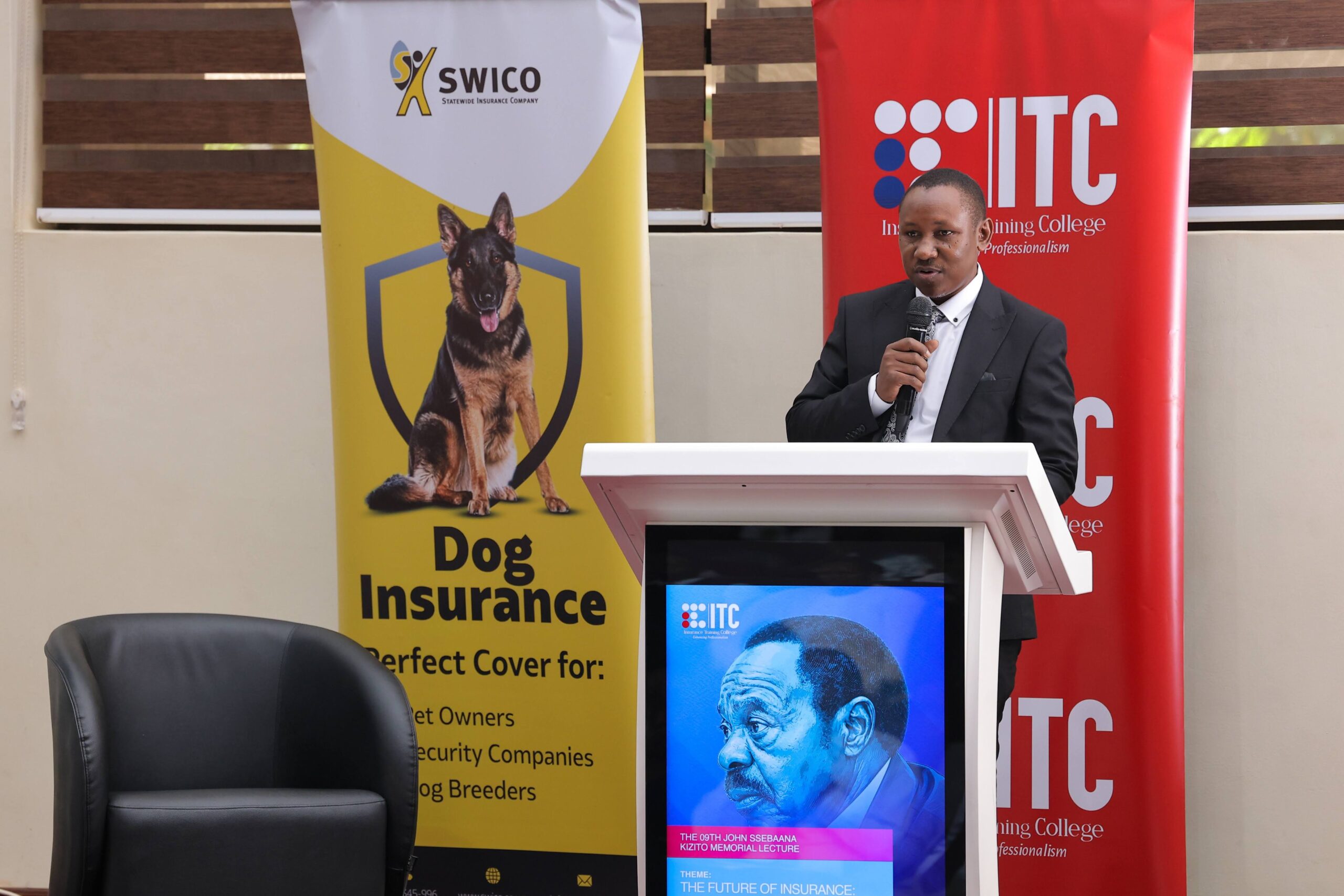
Bakesiga Christopher Mugisha Ag. Chief Executive Officer, Insurance Brokers Association of Uganda (IBAU)
Uganda’s insurance industry is entering a more consequential phase. With annual Gross Written Premium now above UGX2 trillion, the question is no longer whether the market can grow, but whether that growth can translate into wider protection and greater resilience across the economy.
With insurance penetration still below one percent, the conversation must shift from how big the industry has become to how much of Uganda’s risk it is actually protecting. The next phase cannot simply be about competing harder for business already inside the insurance ecosystem. The bigger opportunity lies among millions of Ugandans, SMEs, farmers and emerging enterprises whose risks remain uninsured.
Insurance is not fundamentally about policies. It is about economic resilience. Can a business survive a major fire? Can a family remain financially stable after losing a breadwinner? Can a farmer recover from climate-related losses? Can an SME withstand a cyberattack or business interruption?
These questions matter because Uganda’s risk profile is changing quickly. Cybersecurity is now an enterprise risk. Artificial intelligence is reshaping financial services and decision-making. Climate variability is affecting agriculture and supply chains, while oil and gas and the digital economy are introducing increasingly complex exposures. We cannot continue designing tomorrow’s protection around yesterday’s risks.
The broker must change too. Technology will increasingly automate quotation comparisons, document analysis, routine communication and data processing. The broker of the future must therefore create value through judgement — understanding a client’s business, identifying emerging risks, structuring appropriate protection and supporting clients when difficult claims arise.
The successful broker of the next decade will look less like an intermediary and increasingly like a corporate risk adviser.
Artificial intelligence makes that transition more urgent. I do not believe AI will eliminate good insurance brokers. But it will expose weak ones. The real question is no longer, “Can AI do what a broker does?” It is: “What must the broker become when AI can do the basic work?”
The answer is deeper expertise, better judgement, faster service and superior risk intelligence. Technology should make the broker more valuable, not less relevant.
We must apply the same honesty to Uganda’s low insurance penetration. For years, we have largely treated it as an awareness problem. Awareness matters, but the industry must also ask whether its products are affordable, simple, accessible and relevant; whether claims processes are easy enough; and whether we are designing around how Ugandans actually earn, spend and interact with financial services.
It is not enough to tell people insurance is important. We must make insurance worth buying.
This is also a governance question. A board can be fully compliant and still preside over an organisation becoming irrelevant. Boards must look beyond accounts, budgets and historical reports to AI, cybersecurity, changing consumer behaviour, sustainability, talent and emerging business models. Future-ready boards must not merely protect institutions from failure. They must position institutions for relevance.
Uganda’s next insurance frontier lies in SMEs, agriculture, oil and gas, healthcare, infrastructure, cyber risk, climate resilience, the digital economy and households that still absorb financial shocks through savings, borrowing or selling assets.
Reaching these markets will require different products, distribution models and partnerships. Insurers and brokers will increasingly need to work with banks, telecoms, fintechs, SACCOs, employers and technology platforms. The industry must go where customers already are rather than continually expecting customers to come to insurance.
For IBAU, the responsibility is clear. Our mandate must extend beyond representing brokers. We must help prepare brokers for the next economy — raising professional standards, strengthening technical capacity, promoting ethical practice and encouraging responsible technology adoption.
We must also ask difficult questions of our own profession: What value should a broker provide in 2030? What capabilities will firms require? How should we deploy AI responsibly? And how do we reach segments that traditional insurance models have struggled to serve?
The UGX2 trillion milestone gives the industry a stronger platform, but milestones should give us confidence, not complacency. The real test is whether we can convert growth into wider economic protection, move from selling policies to solving risks and anticipate disruption rather than react to it.
The next trillion must not simply make Uganda’s insurance industry bigger. It must come from making insurance matter to far more Ugandans.
The Writer is Bakesiga Christopher Mugisha Ag. Chief Executive Officer, Insurance Brokers Association of Uganda (IBAU)















Leave a Reply