


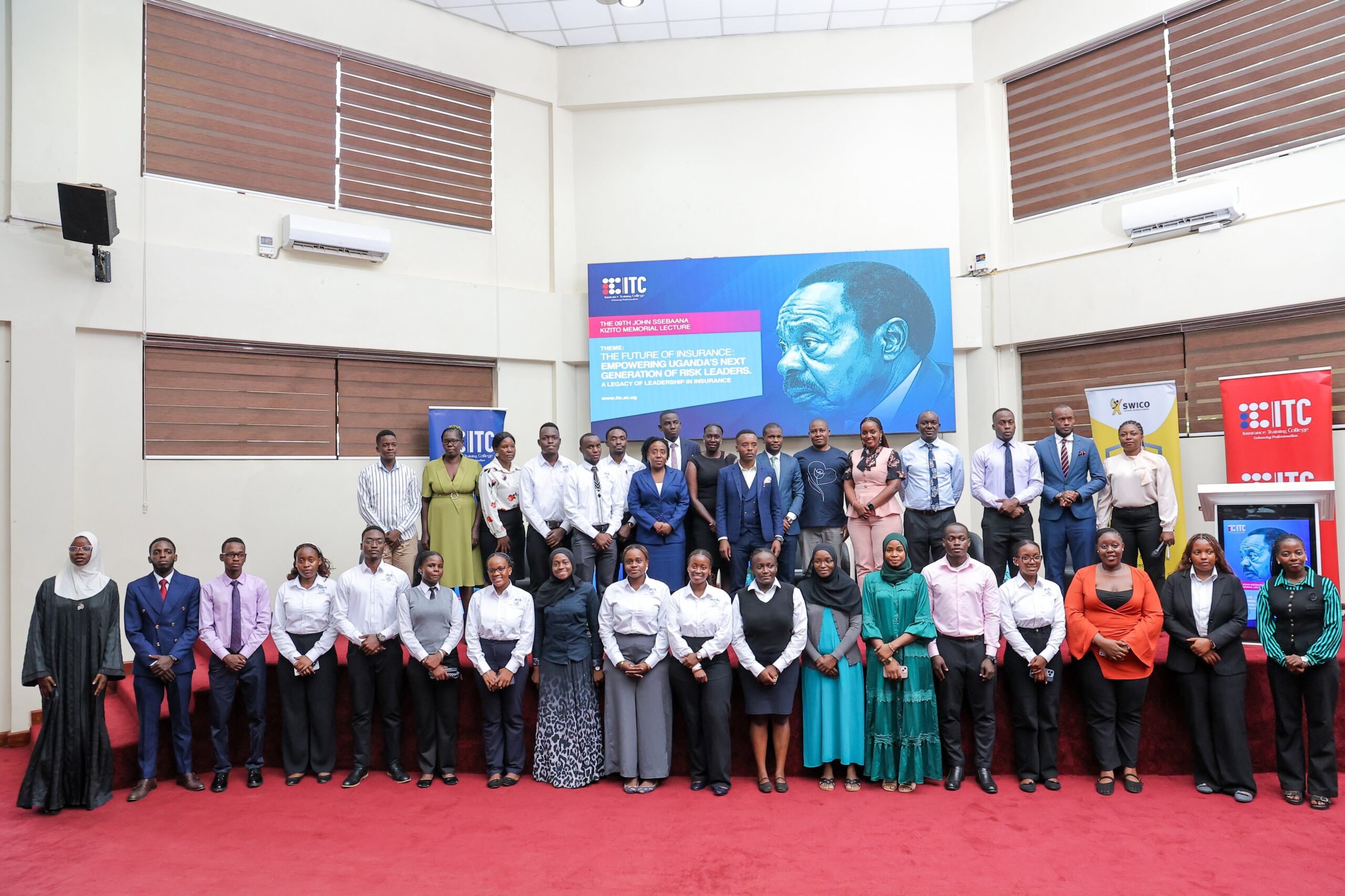
Uganda’s Insurance experts have urged university students and fresh graduates to develop practical, communication and problem-solving skills beyond academic qualifications if they are to compete effectively for jobs in the sector.
The call was made during the 9th John Ssebaana Kizito Memorial Lecture, held at the School of Public Health Auditorium at Makerere University under the theme, “The Future of Insurance: Empowering Uganda’s Next Generation of Risk Leaders — A Legacy of Leadership in Insurance.”
Industry leaders said employers are increasingly looking for University students who can translate their academic knowledge into practical solutions, understand customers and the regulatory environment, and adapt to emerging technologies and trends.
Achen Mercy Melissa, a Senior Actuarial Officer at SWICO, said academic performance may open the door for a graduate, but their ability to demonstrate value is what sets them apart.
“Academic performance gets you into a conversation, but the rest is best of the value you will need to offer,” Melissa said.
She cited curiosity as one of the qualities that helped her navigate her early career, particularly when she was placed in an actuarial role at a time when the organisation did not have an established actuarial office.

“I didn’t do internship with other students that went through a COVID session, so we did projects. And no experience of any actuarial work, but there I was,” she said.
Melissa said her curiosity pushed her to understand different aspects of the insurance business, including underwriting, claims, reinsurance, marketing and finance.
“You need to literally know everything from underwriting, through to claims, through to reinsurance, through to how to connect all of the operations entity over to the financial sector,” she said.
She also challenged students to develop communication skills so they can explain complex technical information to people without technical backgrounds.
“The ability to translate my technical skills into something stakeholders can understand” is critical, she said, adding that she had to deliberately improve her public-speaking skills and seek mentors to help her communicate actuarial findings effectively.
Melissa further urged students to become comfortable with asking questions and interrogating data rather than simply producing figures.
“Data already speaks the truth. So, it’s up to you to get your data, analyze it, make it insightful, and make recommendations,” she said.
She also encouraged graduates not to view rejection as a measure of their worth, but as an opportunity to identify gaps and improve.
“When I started applying for jobs, I started before regression. I applied for opportunity,” she said, explaining that repeated interviews and unsuccessful applications helped her gain experience and understand what employers were looking for.
Melissa said young professionals should assess their strengths and weaknesses, improve their skills and remain persistent as they search for opportunities.
The need for graduates to understand the insurance industry before entering the job market was also emphasised by Shakira Muguni, CEO of GA Insurance Uganda.
Muguni said aspiring insurance professionals must understand both the theoretical and practical sides of the industry.
 Acting CEO of the Insurance Regulatory Authority of Uganda delivers remarks during the 9th John Ssebaana Kizito Memorial Lecture at Makerere University
“First of all, you need to understand what insurance is all about. There is a theory bit of it, and there is a practical bit of it. You need to understand the technicalities in the industry,” she said.
She added that knowledge of customers, regulation, technology and emerging industry trends is equally important.
“You need to know what you are getting into, even before you aspire to become a leader in the industry. It begins with you. Have the passion for the industry, and then go over and above to make sure that you acquaint yourself with every area,” Muguni said.
Dr Dumba Sulaiman Ibrahim, Academic Registrar at the Insurance Training College, said the institution is working with universities to expose students to the insurance industry before they graduate.
He said students are given opportunities to participate in short-term trainings, mentorship programmes, career talks, panel discussions, conferences and other industry engagements.
“We inform the students about the emerging areas in the sector, the developments in the sector. We give them an opportunity to attend our short-term trainings free of charge. And on top of that, we give them a certificate that clearly shows that someone attended the training,” Dumba said.
He said such initiatives help students understand the industry and the opportunities available before they enter the job market.
Dumba also encouraged students to take advantage of professional insurance qualifications, including the Certificate of Proficiency in Insurance, which can open opportunities in areas such as insurance agency and bancassurance.
Meanwhile, Symon Wandiembe, Head of Department, Statistical Methods and Actuarial Science at Makerere University, challenged students to move beyond focusing on passing examinations and instead concentrate on how they can contribute solutions to the industry.
“Most of you focus on passing. When you come to my office, you focus on passing,” Wandiembe said.
He urged students to identify areas where they can add value rather than simply seeking the easiest academic options.
“We need to say, ‘I want to add value.’ I need to be bold. I need to say, where are others running away? There I should go. There’s an opportunity,” he said.
Wandiembe also called for stronger collaboration between universities and the insurance industry, particularly in providing students with practical exposure and locally relevant data.
 A student asks a question during the memorial lecture at Makerere University
“We are trying to work with the industry to get the data, to give our students real practical data,” he said.
He further appealed to insurance companies and industry leaders to continue supporting universities through guest lectures, mentorship and leadership training for students.
The speakers agreed that as Uganda’s insurance industry evolves, the next generation of professionals will need more than academic qualifications. Curiosity, communication, practical experience, adaptability, technical competence and a willingness to continuously learn will increasingly determine who is able to create value and rise into leadership positions.













Leave a Reply