


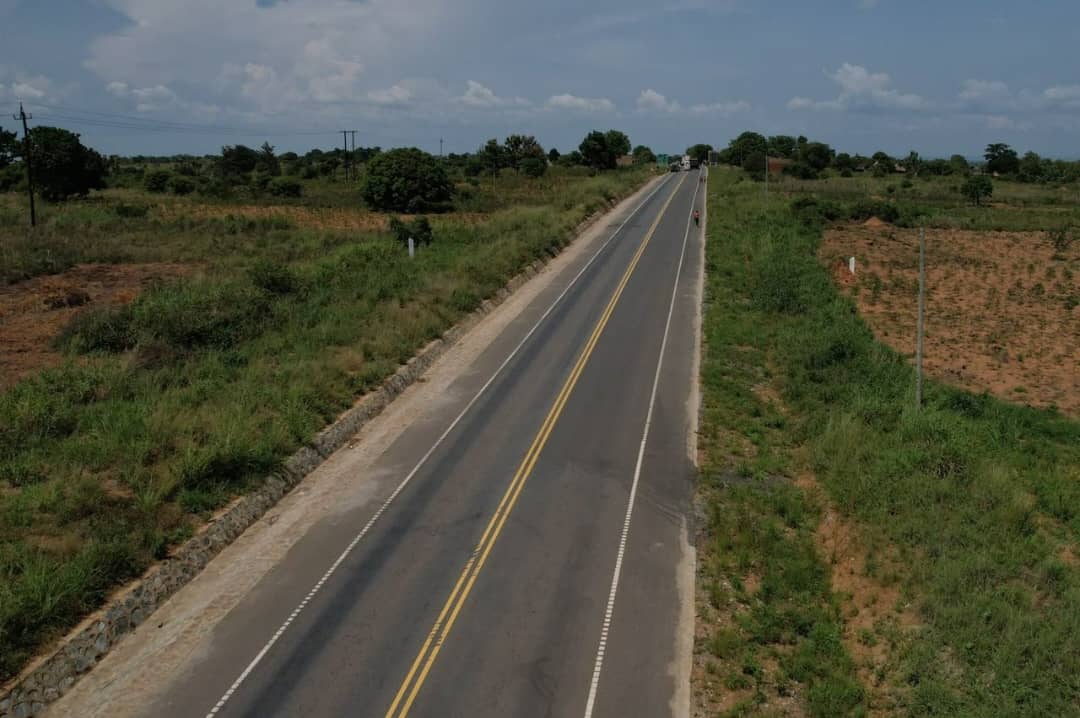
Uganda’s road network remains overwhelmingly unpaved, with only 5.57 per cent of the country’s 159,561-kilometre road network paved, according to a statement by the Minister of Works and Transport, Fred Byamukama.
Presenting the status of roads across the country to Parliament, Byamukama said 150,679 kilometres of the national road network are unpaved, accounting for about 94.43 per cent of the total network.
The country’s road network comprises 6,405 kilometres of paved national roads and 14,897 kilometres of unpaved national roads, alongside urban, district, Kampala Capital City Authority and community access roads.
“Road transport is the dominant mode of transport, accounting for over 90% of cargo freight and passengers’ movement in the country,” Byamukama told Parliament.
He said government has prioritised road infrastructure development to improve connectivity, facilitate trade, support regional integration and promote socio-economic transformation.
Shs10.5 trillion road asset value lost
The Minister revealed that government has invested Shs37.4 trillion in developing and improving the national roads network over the years.
However, inadequate maintenance funding, weaknesses in planning and corruption have resulted in the deterioration of roads and a significant loss in the value of the country’s road assets.
“It is estimated that UGX 10.5 trillion in road asset value has been lost, leaving the current National Road Asset valued at UGX 26.9 trillion,” Byamukama said.
He said government is responding by strengthening governance, accountability and oversight of road works while working with the Ministry of Finance, Planning and Economic Development to increase funding for road maintenance.
For the 2026/27 financial year, the Ministry of Finance allocated Shs326 billion for road maintenance against an estimated annual requirement of Shs807 billion.
Byamukama said the funds will support routine and periodic maintenance of paved and unpaved roads, bridge maintenance, emergency interventions following floods and landslides, drainage improvements and other road asset preservation measures.
He warned that delayed maintenance increases the cost of repairing roads.
“When periodic maintenance is not undertaken at the appropriate time, roads deteriorate further and eventually require more costly rehabilitation or reconstruction,” he said.
Kampala-Jinja Road works stalled over corruption
The Minister also disclosed that periodic maintenance works on the 72-kilometre Kampala-Jinja Road have stalled due to corruption-related issues.
The project had reached 75 per cent completion.
“Implementation has stalled due to corruption issues. The Ministry is addressing these matters to enable the works to resume and the project to proceed to completion,” Byamukama said.
He also cited corruption and collusion among some government officials and contractors as a major challenge affecting the implementation of road projects.
According to the Minister, some officials have allegedly colluded with contractors to inflate project costs through commission fees and other improper arrangements.
He said the problem is worsened by poor project preparation, including instances where contracts are signed and works begin before the required Right of Way has been secured.
“The resulting delays and disruption to works expose Government to contractual claims, additional costs and ultimately place an unnecessary financial burden on the public,” Byamukama said.
Government plans new road projects
Despite the challenges, Byamukama said government plans to commence several national road upgrading projects during the 2026/27 financial year, subject to availability of resources.
The planned projects include the 69-kilometre Katine–Ochero Road, 95-kilometre Kumi–Ngora–Serere–Kagwara Road, 56.5-kilometre Karugutu–Ntoroko Road, 49-kilometre Bubulo–Bududa Circular Road and Mbale–Nkonkojeru Road, and the 143-kilometre Hamurwa–Kerere–Kanungu–Kanyantorogo–Butogota–Buhoma/Hamayanja–Ifasha–Ikumba Road.
Other planned upgrades include the 68-kilometre Karenga–Kapedo–Kaabong Road, 127-kilometre Jinja–Mbulamuti–Kamuli–Bukungu Road, 115-kilometre Kitgum–Kidepo Road, 16-kilometre Nebbi–Goli Road and the Laropi–Moyo–Afoji Road.
Government also plans to rehabilitate the Mbarara–Ibanda, Mbarara–Ishaka, Nebbi–Arua, Mukono–Jinja, Ntungamo–Kagamba–Rukungiri and Gulu–Atiak–Nimule roads.
The Ministry further plans to rehabilitate and upgrade Masindi Port Bridge and Karuma Bridge.
Several major roads nearing completion
Byamukama said several major national road projects have either been completed or are at advanced stages of construction.
Recently completed projects include the 33-kilometre Alwii–Nebbi Road, the 189.4-kilometre Soroti–Dokolo–Lira–Kamdini Road, the 42-kilometre Moroto–Lokitanyala Road and 21 kilometres of Pallisa and Kumi town roads.
Among the ongoing projects, the Apac–Lira–Puranga Road is at 95.95 per cent completion, while the Masindi–Biiso, Kabaale–Kiziranfumbi and Hohwa–Nyairongo–Kyarushesha–Butole roads are at 92.6 per cent.
The Muyembe–Nakapiripirit Road stands at 88.4 per cent, while the Luwero–Butalangu Road is at 84.8 per cent.
The Karuma–Olwiyo Road is at 98.6 per cent, while the emergency reconstruction of selected sections along the Kampala–Masaka Road is at 82 per cent.
However, some projects remain at relatively low levels of completion. The Kikorongo–Bwera–Mpondwe Road, for example, stands at just 2.88 per cent, while the Masaka–Kyotera–Mutukula Road project and associated rehabilitation works are at 22.82 per cent.
Climate change, funding among major challenges
Byamukama identified climate change, inadequate maintenance funding, lengthy procurement processes and the limited capacity of local contractors as some of the major challenges facing the road sector.
He said climate change is contributing to the deterioration of transport infrastructure, while aging infrastructure requires significant capital investment.
The Minister also said government wants to strengthen local contractors so they can undertake larger and more complex infrastructure projects.
“Strengthening the domestic construction industry will, over time, increase local participation, reduce the cost of undertaking infrastructure works and retain a greater share of the investment within the country by reducing the repatriation of profits,” he said.
Byamukama assured Parliament that the Ministry would continue implementing short- and medium-term road upgrading and maintenance interventions, subject to availability of funds.
“Developing road infrastructure remains central to Government’s efforts to improve connectivity, facilitate trade, support regional integration and drive socio-economic transformation,” he said.











Leave a Reply