


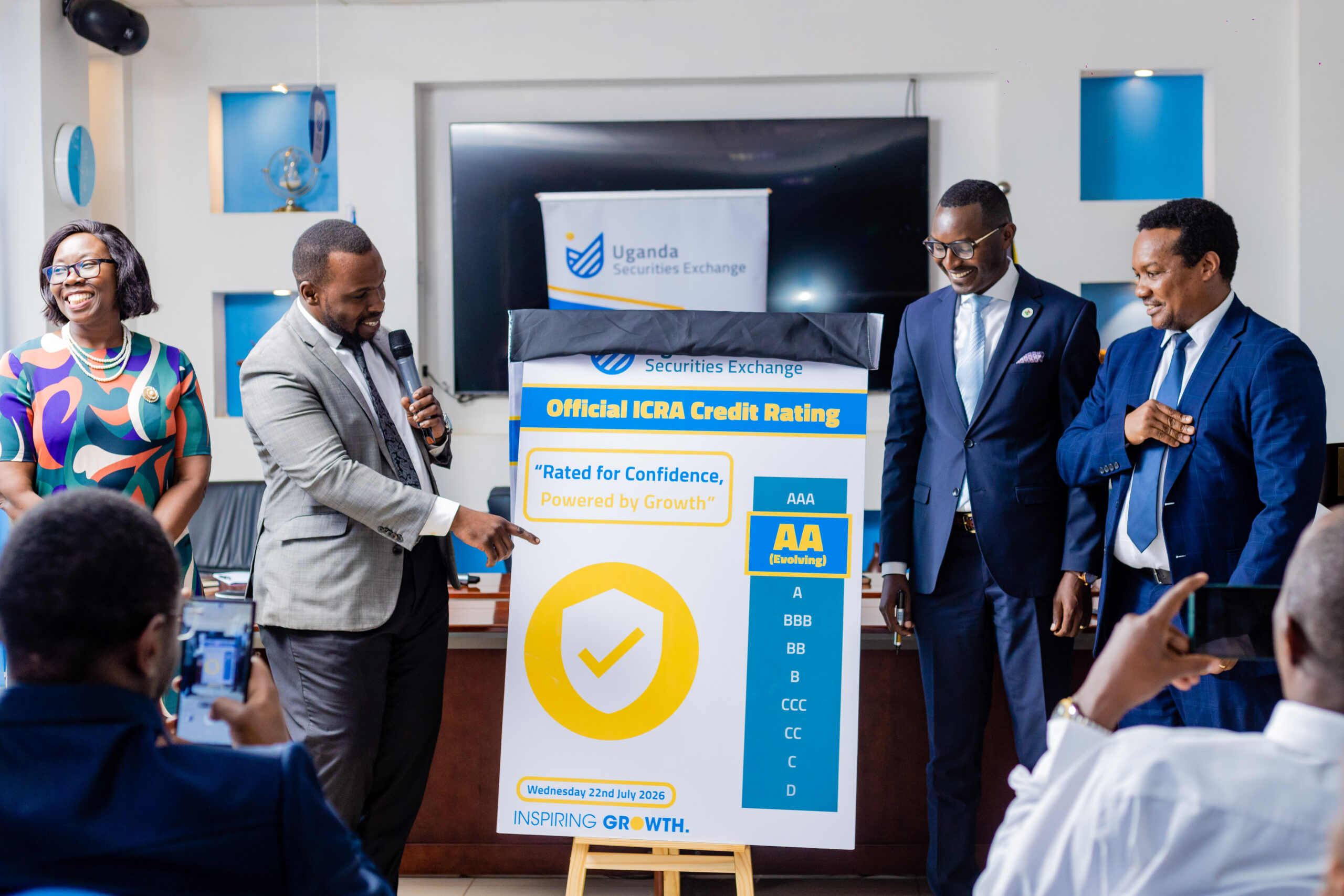
Uganda’s ambition to build a stronger and more competitive capital market has received a major boost after the Uganda Stock Exchange (USE) earned a Double AA (AA) credit rating from the Investment Information and Credit Rating Agency (ICRA), a move expected to reinforce confidence among local and international investors.
The independent assessment places the Exchange among the first market infrastructure institutions in Uganda to undergo a formal credit evaluation, signalling that the country’s securities market is adopting globally recognised standards of transparency, governance and financial accountability.
For a market that has traditionally relied on reputation to inspire confidence, the rating offers investors an independent benchmark of the Exchange’s financial strength and operational stability, reducing uncertainty and strengthening trust in the institution that facilitates securities trading.
ICRA evaluated the Uganda Stock Exchange under three key areas: institutional strength, financial profile and governance framework. The agency found the Exchange to be financially sound, citing its debt-free balance sheet, strong liquidity position, diversified revenue base and effective governance systems as the main drivers behind the Double AA rating
Jeremiah Karugaba director legal at ICRA, said the rating reflects an institution with a very strong ability to meet its financial commitments while maintaining operational resilience.
“The Uganda Stock Exchange demonstrated strong fundamentals across the areas we assessed. Its debt-free capital structure, strong liquidity position and sound governance framework underpin the Double AA rating and position the Exchange to support the continued growth of Uganda’s capital markets,” an ICRA Legal director said.
The recognition comes at a time when Uganda is working to expand alternative sources of financing beyond commercial bank lending. Government and regulators have increasingly encouraged businesses to tap equity and bond markets to finance expansion, infrastructure projects and industrial development.
Despite recent progress, Uganda’s capital market remains relatively small, with few listed companies and limited corporate bond activity. Authorities view stronger market institutions as critical to attracting more issuers, broadening the investor base and introducing new investment products.
Uganda Stock Exchange Chief Executive Officer Paul Bwiso described the rating as independent confirmation of the Exchange’s financial resilience and governance standards.
“Trust built on reputation alone is no longer enough. Investors increasingly demand independent evidence of institutional soundness. This rating provides exactly that. It confirms our strong capital structure, exceptional liquidity, diversified revenues and that there are no going-concern issues regarding this institution,” Bwiso said.
He noted that the assessment is expected to improve the Exchange’s standing with both domestic and international investors while supporting efforts to attract additional listings and broaden investment opportunities.
Bwiso added that the Exchange is preparing to introduce more debt and equity products as Uganda’s capital markets continue to evolve.
“The market is entering a new phase. We expect to see more debt securities, new equity products and broader participation from issuers and investors. An independent rating enhances confidence in the institution providing that marketplace,” he said.
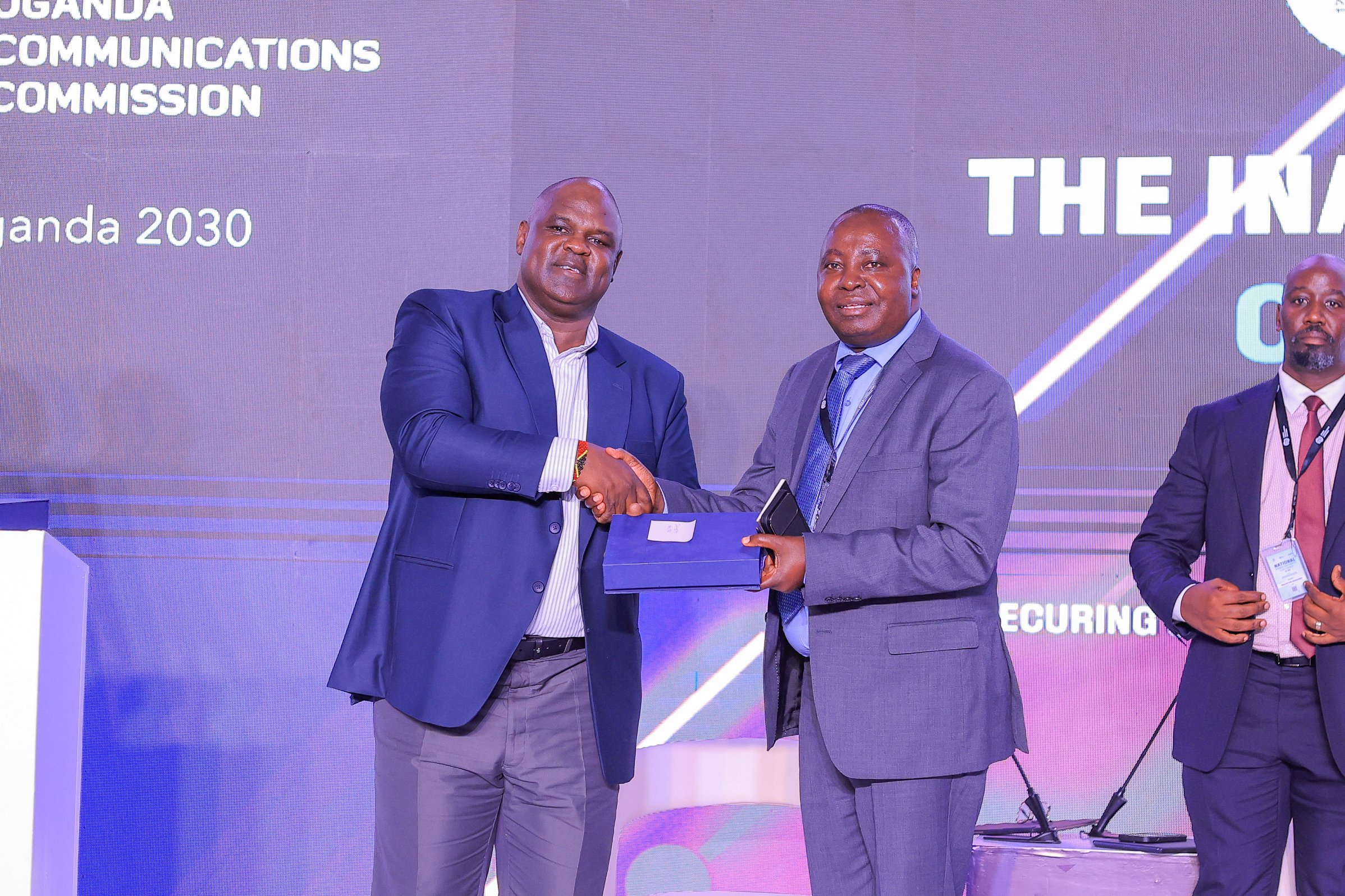
 Paul Bwiso C.E.O-USE
The Capital Markets Authority (CMA) believes the development extends beyond the Uganda Stock Exchange, describing it as a milestone for the country’s entire financial ecosystem.
CMA Chief Executive Officer Josephine Ossiya said independent credit ratings play an important role in improving transparency by providing investors with objective information about institutional strength and risk.
“This rating demonstrates that Uganda’s capital markets are maturing. Independent credit assessments strengthen transparency, enhance investor confidence and encourage better corporate governance. We hope more institutions and issuers will embrace credit ratings as they seek long-term capital from the market,” Ossiya said.
She added that wider adoption of independent ratings could enable more Ugandan companies to diversify their financing options beyond traditional bank borrowing while improving access to both domestic and international investors.
Financial analysts say the USE’s achievement could encourage listed companies, financial institutions and bond issuers to pursue similar assessments, creating a more transparent market where investment risks are easier to evaluate and price.
The rating is also expected to improve Uganda’s visibility among foreign institutional investors, many of whom consider independent credit assessments when making investment decisions.
As Uganda implements the Fourth National Development Plan, which places greater emphasis on mobilising private capital for infrastructure and industrialisation, stronger and more credible market institutions are expected to play a central role in attracting long-term investment and strengthening the country’s financial markets.
For the Uganda Stock Exchange, the Double AA rating is more than a measure of financial health—it is a signal that Uganda’s capital market is steadily aligning itself with international best practice and positioning itself to compete for investment in an increasingly competitive global economy.













Leave a Reply