



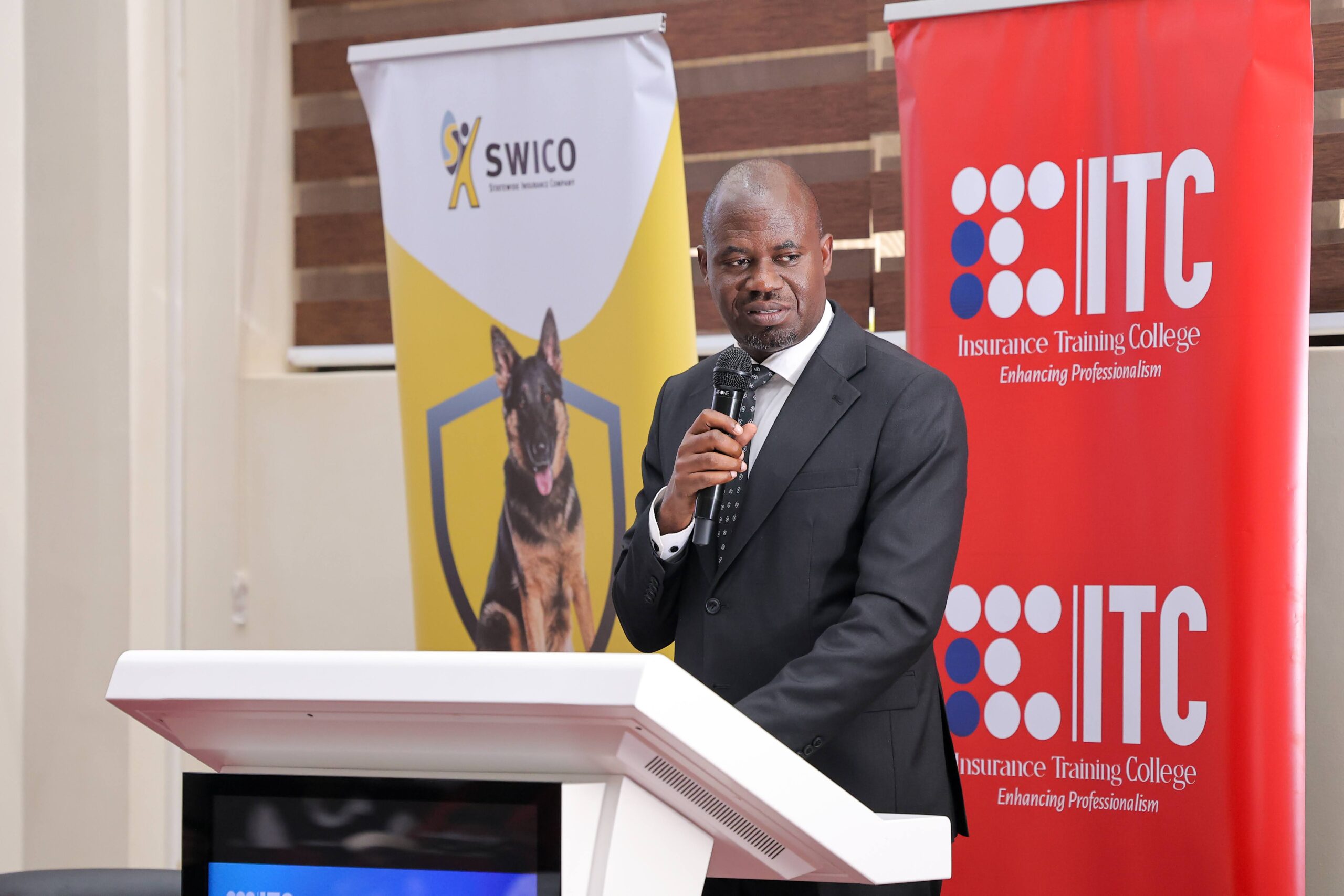
Executive Director Dr. Joseph Muvawala addressing Insurance players recently
National Planning Authority (NPA) Executive Director Dr. Joseph Muvawala has challenged Uganda’s insurance industry to position itself at the centre of the country’s Tenfold Growth Strategy, warning that insurance cannot afford to wait for economic growth before expanding.
Muvawala said insurance should be treated as part of Uganda’s development architecture because businesses and investors are unlikely to take productive risks without mechanisms to identify, price, pool and transfer those risks.
He made the remarks on Wednesday at the 69th Insurance Regulatory Authority (IRA) CEO Breakfast Meeting at Kampala Serena Hotel, held under the theme of opportunities for the insurance sector under Uganda’s Tenfold Growth Strategy.
“Insurance is not a service that becomes relevant after growth has occurred. And that’s how we see it. It is not a service that should become relevant after we have grown,” Muvawala said.
“No wonder I have written four plans and I have not come here. So we have thought that insurance will catch up. After we have grown, insurance will come in. Big mistake. Big mistake.”
According to Muvawala, insurance is part of the institutional framework needed to make economic growth possible because major investments depend on the ability to manage risks.
“It is part of the institutional architecture that makes growth possible,” he said.
Muvawala said Uganda’s ambition to transform its economy under the Tenfold Growth Strategy requires the country to accelerate economic expansion while dealing with a rapidly growing population and increasing demand for public services.
He argued that Uganda needs stronger economic growth because the country’s average economic growth of about six percent is being eroded by population growth of about three percent and inflation.
“This is a survival strategy. At the pace at which we are growing, and at the pace at which service demand outpaces growth, with high populations, with a young population, with a dependent population, means that government must invest heavily in service delivery,” he said.
Muvawala said the Tenfold Growth Strategy will create new opportunities for insurers across agriculture, tourism, minerals, oil and gas, science, technology and innovation—the priority areas commonly referred to as the ATMs. He said the transformation of these sectors would generate demand for specialised insurance products covering everything from crops and livestock to infrastructure, cargo, cyber risks and environmental liabilities.
“Agro-industry requires protection of crops, livestock, irrigation equipment, warehouses, processing facilities, cargo, and business interruption,” Muvawala said.
“Tourism requires property insurance, travel, aviation, marine, public liability, and event-related cargo.”
He added that the minerals, oil and gas sectors would require specialised engineering, environmental liability, cargo and operational risk insurance, while the technology sector would create demand for cyber insurance, data protection and professional indemnity products.
Muvawala, however, warned that these opportunities would not automatically translate into business for Ugandan insurers unless the industry develops the capital, technical expertise and data needed to compete for major projects.
“However, will these opportunities automatically become business for Ugandan insurers? It’s a question you ask yourself. And the answer is no,” he said.
He called on local insurers to engage major projects at the design and financing stages instead of waiting until contracts and financing arrangements have already been concluded.
“If domestic industry enters only after a project, contracts and financing arrangements have been concluded, much of the premium risk and technical knowledge will be transferred outside the country,” Muvawala said.
He particularly challenged the insurance industry to become more involved in financing arrangements for major government and private-sector projects, noting that Uganda’s shift from grants towards commercial borrowing would create additional demand for insurance.
“As we go tenfold, colleagues, and as we celebrate becoming a middle income, lower middle income, the supply of grants is coming tending to zero. We are now going for commercial loans, and those will require insurance,” he said. “We are going for contractor financing. That will require insurance.”
Muvawala also called for deliberate investment in insurance data, saying reliable data would help insurers improve risk assessment and pooling while potentially making insurance more accessible.
“For us to optimise, to do the risk pooling, to bring down those premiums, we have reliable data. And this is to my brother, the regulator. We must invest, and data is an investment,” he said.
He urged insurers to develop clear areas of technical specialisation instead of attempting to cover every emerging risk.
“The question here for chief executives is therefore straightforward. Where will your company build genuine technical competence within Uganda’s transformation agenda?” he asked.
“Which value chains will the company serve? Which products will it develop? And what capital, data, skills, and reinsurance arrangements will be required?”
Muvawala also challenged the industry to broaden insurance coverage, arguing that the limited size of Uganda’s insurance pool affects the ability of companies to spread risks and lower premiums.
“If coverage is low, then where is the pooling? And why should we complain about the premiums? If we want to drive premiums down, we have to increase coverage,” he said.
He said the performance of the insurance industry should also be measured beyond premium collections, including the productive assets protected, investments enabled, savings mobilised and the speed at which households and businesses recover after losses.
“The place of insurance in the Tenfold is therefore clear. Insurance must now grow with the economy, move ahead of the emerging risks, and extend beyond its traditional market,” Muvawala said.
He also called for closer collaboration between the insurance industry, government and the regulator, saying the NPA was ready to work with the sector to identify policy changes required to support its expansion.
Muvawala further pledged to push for greater insurance expertise within the government planning system, saying he intends to identify an insurance professional who can help NPA better understand and incorporate the sector into national planning.
Meanwhile, IRA Acting Chief Executive Officer Dr Protazio Sande said the insurance sector has a responsibility to ensure that Uganda’s economic transformation does not leave major investments and businesses exposed to risks.
“As the insurance sector, we have the responsibility to make sure that all these aspirations do not go unprotected,” Sande said.
He said Uganda’s transformation agenda was expected to create opportunities as agriculture becomes more commercialised, tourism expands, infrastructure develops and more households enter the money economy.
Sande said the CEO breakfast meeting was intended to help the insurance industry identify how it could contribute to the wider economic transformation agenda.
“It’s a call for all of us to contribute to this wider ambition,” he said.














Leave a Reply