


Uganda is looking to reduce its dependence on foreign aid and attract more private investment as global financing conditions become tighter and governments face rising debt costs.
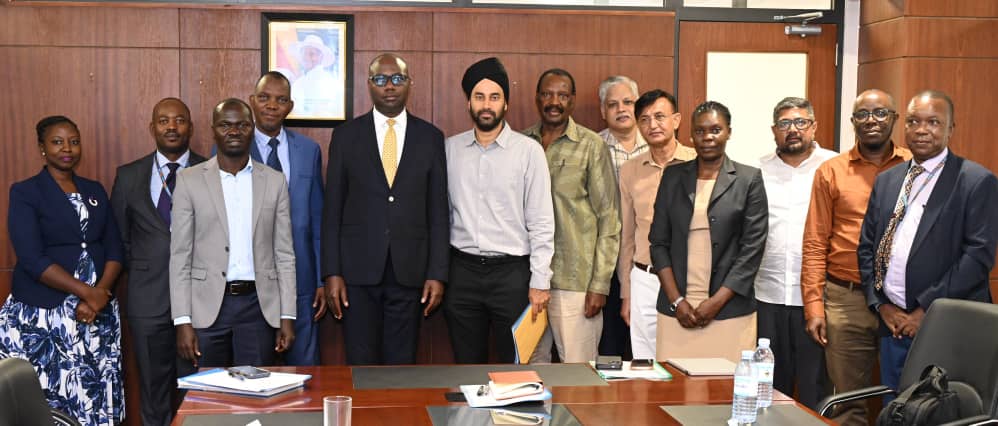
The strategy was outlined by Uganda’s top economic officials during the 2026 Annual Meetings of the International Monetary Fund (IMF) and World Bank Group in Bangkok, Thailand, held from October 12 to 18.
The meetings brought together global finance ministers, central bank governors and economic policymakers at a time when the IMF raised its 2026 growth forecast for Sub-Saharan Africa to 4.5 per cent, from 4.3 per cent.
Despite the improved growth outlook, the region continues to face pressure from high debt-servicing costs and declining development assistance. The IMF estimates that debt servicing consumes about 12 per cent of government revenues across Africa, while international development aid is projected to fall by 12 per cent.
For Uganda, the changing global financing environment is pushing government to look beyond traditional sources of funding and focus more on domestic revenue and private capital.
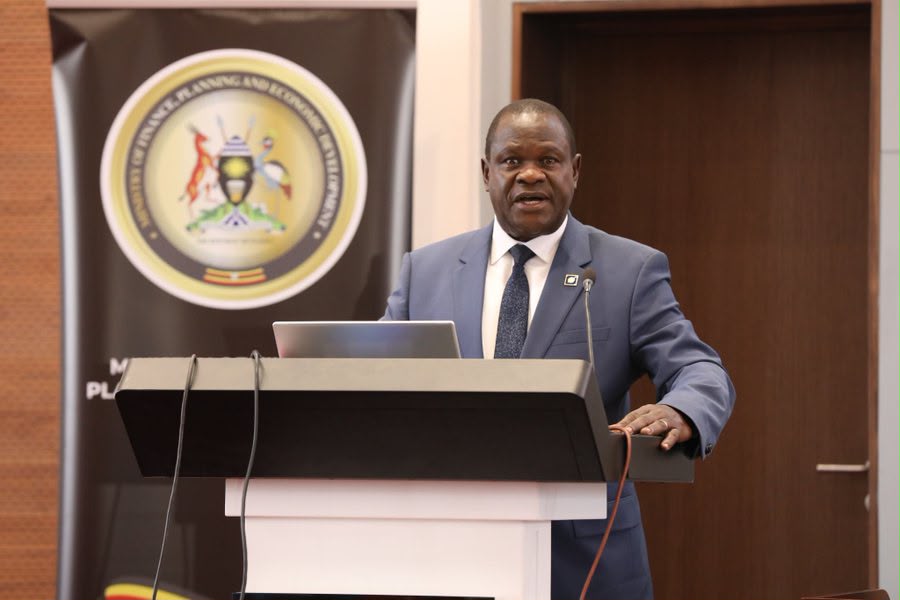
Finance Minister Henry Musasizi said the country must also ensure that economic growth translates into jobs, particularly for its young population.
“Out of 100 people in Uganda, the median age is 16,” Musasizi said, underscoring the pressure on government to create opportunities for young Ugandans.
He said Uganda’s priority is to build an economy that can withstand external shocks while continuing to respond to the needs of its population.
As part of the strategy, government is targeting an increase in domestic tax collection from about 14 per cent to 20 per cent of GDP over the next five years.
Musasizi also disclosed progress in securing financing for major infrastructure projects, saying the World Bank had agreed to support Uganda’s railway expansion.
He said the Malaba-Kampala Standard Gauge Railway project was fully subscribed, while discussions were continuing on the proposed Kasese line and infrastructure linked to mining developments.
Bank of Uganda Governor Dr Michael Atingi-Ego was also part of the Ugandan delegation, as the country sought to align monetary and fiscal policies amid global economic uncertainty.
Permanent Secretary and Secretary to the Treasury Ramathan Ggoobi said Uganda’s development strategy was increasingly aligned with the priorities of international financial institutions, particularly the World Bank’s focus on growth that creates employment.
He pointed to investments in agriculture, tourism and minerals as key areas through which Uganda can expand its economic base.
The World Bank’s Agri-Connect programme, Ggoobi said, is expected to support agricultural production and processing, while greater private sector participation will be encouraged across other productive sectors.
“The World Bank is very well aligned with our strategy for growing the economy 10-fold because their own agenda now is to promote growth that creates jobs,” Ggoobi said.
He added that the emphasis on leveraging private capital could enable businesses to expand and create employment for young people.
The discussions also highlighted the importance of coordination between fiscal and monetary authorities as Uganda deals with external pressures, including fuel price increases and disruptions to global supply chains.
For Uganda, the Bangkok meetings were therefore less about securing traditional aid and more about positioning the economy for a shift towards domestic revenue, private investment and infrastructure-led growth.
The challenge now is to turn the commitments and financing discussions into projects and businesses capable of generating jobs and raising incomes for the country’s rapidly growing young population.






Leave a Reply