


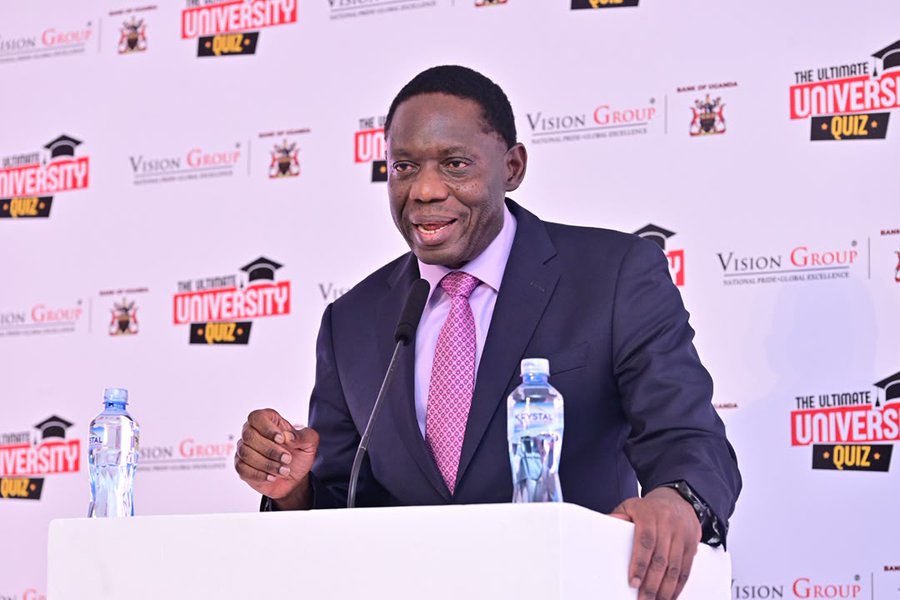
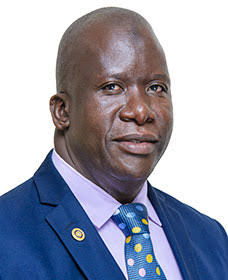
Bank of Uganda Governor Michael Atingi-Ego
Uganda’s plan to raise billions of shillings from the domestic financial market has come under scrutiny after Bank of Uganda Governor Michael Atingi-Ego warned that further government borrowing could push up interest rates and make credit more expensive for businesses and households.
Appearing before Parliament’s Budget Committee, Atingi-Ego said the domestic financial market could accommodate government’s planned borrowing for the 2026/27 financial year, but cautioned against borrowing beyond the projected level.
He said excessive demand for funds by government could increase interest rates and crowd out private-sector borrowers at a time when lending to businesses is expanding.
“The domestic market can absorb the planned Shs12.7 trillion borrowing,” Atingi-Ego told the committee chaired by Gabriel Okumu. “However, borrowing beyond the projected level could increase interest rates and crowd out private-sector credit.”
The warning comes as government continues to rely on the domestic debt market to finance its budget and refinance maturing obligations.
Parliament approved an Shs84.3 trillion budget for the 2026/27 financial year, with Shs11.97 trillion expected to come from domestic borrowing and another Shs13.97 trillion earmarked for refinancing domestic debt.
The figures highlight the growing importance of domestic financing to government operations, while also raising questions about how much credit remains available to the private sector.
Credit demand
Atingi-Ego told MPs that private-sector credit grew by 16.1 per cent year-on-year in June 2026, pointing to stronger lending activity in the economy.
The concern for policymakers is whether sustained government borrowing could place pressure on the same pool of funds accessed by businesses and households.
When government issues Treasury bills and bonds to raise money locally, commercial banks and other investors may allocate more resources to government securities. If this increases competition for available funds, private borrowers could face higher financing costs.
For businesses, particularly those seeking loans to expand production, purchase equipment or increase working capital, higher interest rates can raise the cost of investment.
Debt costs add pressure
The borrowing debate comes against the backdrop of a budget in which debt-related obligations account for a significant share of public expenditure.
Parliament said debt servicing for 2026/27 is projected at about Shs33.4 trillion, with interest payments estimated at Shs12.4 trillion. Domestic borrowing is identified as a major contributor to interest costs.
The Ministry of Finance’s budget framework also provides for Shs13.97 trillion in domestic debt refinancing, alongside Shs4.18 trillion for debt amortisation.
This means government must balance the need to finance public programmes and refinance existing obligations with the potential impact of continued borrowing on the wider financial market.
Parliament urged to scrutinise borrowing
Budget Committee chairman Gabriel Okumu called on Parliament’s Budget and National Economy committees to resist further increases in domestic borrowing.
“The Budget Committee and the National Economy Committee should do their best to discourage heavy borrowing,” Okumu said.
Atingi-Ego also called for Uganda’s fiscal debt path to be reviewed, particularly for the 2026/27 financial year.
He warned that projections contained in the Charter for Fiscal Responsibility could become difficult to achieve if the debt stock used as the basis for those projections does not reflect the country’s current position.
“We need to revisit the fiscal debt path, particularly for FY2026/27,” he said.
The Charter for Fiscal Responsibility provides the medium-term framework for government’s fiscal management, including borrowing, expenditure and public debt.
Call for annual assessment
Central bank officials have recommended that risks to Uganda’s debt trajectory be assessed annually.
They also proposed that the fiscal framework require government to report each year on its domestic financing strategy and its effect on private-sector credit.
The recommendations come as Uganda seeks to maintain investment in infrastructure and other development priorities while managing rising debt-related costs.
The government’s 2026/27 budget projects domestic revenue of Shs45.96 trillion, domestic borrowing of Shs11.97 trillion and domestic debt refinancing of Shs13.97 trillion.
The debate therefore extends beyond how much government can borrow. It also centres on how borrowing affects the cost and availability of finance for the businesses expected to drive investment, production and employment.
For Uganda’s private sector, the central issue will be whether continued government demand for domestic financing can be managed without undermining access to affordable credit as the economy expands.














Leave a Reply