


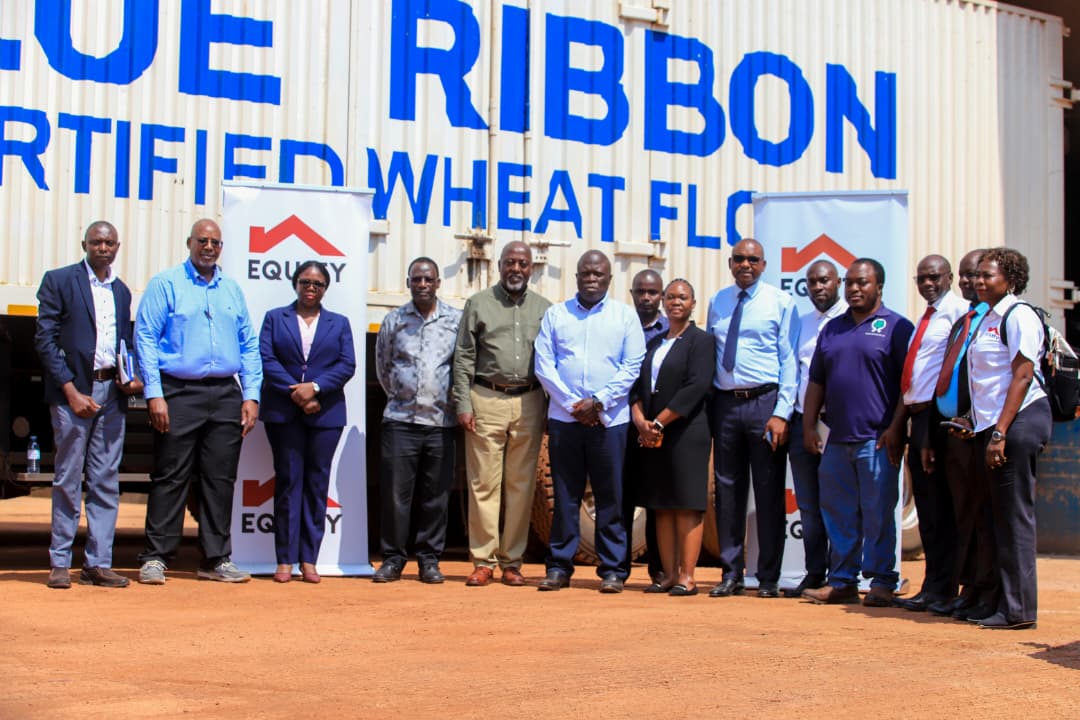
Master Grain Milling MD Hajji Swammit Itaaga (centre) with Equity Bank Uganda Board Chairman Henry Rugamba and MD Gift Shoko during a visit to the company’s Jinja plant
What started as a modest wheat flour operation with a single production line in 2013 has grown into a Jinja-based agri-processing business with an annual turnover of more than Shs60 billion.
Master Grain Milling Limited has spent the past 13 years expanding its production capacity, investing in modern machinery, building a nationwide distribution network and creating new jobs, with access to finance emerging as a critical driver of its growth.
A major turning point came in 2018 when the company secured financing from Equity Bank Uganda after its previous bankers could no longer provide the capital needed to support its expansion.
“Equity Bank saved us some time back. Our former bankers reached a point where they couldn’t support us financially, but Equity Bank came on board and gave us the exact funds we needed,” said Hajji Swammit Itaaga, Managing Director of Master Grain Milling Limited.
The financing enabled the company to invest in production equipment and strengthen its operations as it transitioned from an owner-managed business into a more structured enterprise.
In 2019, Master Grain Milling acquired a modern production line from Europe, significantly increasing its production capacity. The investment was followed by the establishment of dedicated finance, production and sales departments, expansion of its distribution network through regional depots and renewal of its transport fleet.
Today, the company has about 22 sales representatives operating across Uganda and a daily production capacity of 540 tonnes, positioning it for further expansion if it can secure the working capital required to fully utilise its existing capacity.
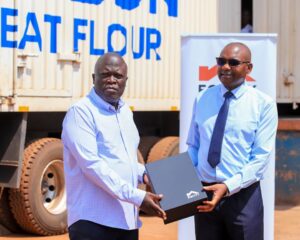 MD-of-Master-Grain-Millers-Limited-Hajji-Swammit-Itaaga-receiving-a-Thank-you-gift-from-Equity-Bank-Managing-Director-Gift-Shoko-during-the-tour
Meddy Mbaziira, the company’s Head of Sales and Marketing, said the transformation has fundamentally changed the way the business operates.
“Initially, the structures weren’t there because it was a one-man-run business, but right now the business has structures,” Mbaziira said.
Adding, “We have dedicated finance and production teams, as well as a sales department with around 22 sales representatives across the country. Where we once relied on a fleet of very old trucks, we now operate with brand-new ones, making distribution easy.”
The changes have enabled the company to move beyond simply increasing production to building an integrated business capable of manufacturing and distributing its products across Uganda.
Despite the investments in machinery and distribution, Master Grain Milling says its next phase of growth depends largely on access to more working capital.
“If we continue working closely with Equity Bank to meet these current needs, we will be able to employ even more people,” Itaaga said.
The issue highlights one of the challenges facing growing manufacturers and agro-processors in Uganda. Investing in machinery creates production capacity, but businesses also require sufficient working capital to purchase raw materials, meet operating expenses, maintain inventories and fulfil orders while waiting for payments.
For Master Grain Milling, unlocking this financing could therefore determine how quickly its existing industrial capacity is translated into higher output and revenues.
The company’s growth prospects were recently assessed during a visit to its Jinja plant by Equity Bank’s executive leadership.
The delegation, led by Board Chair Henry Rugamba and Managing Director Gift Shoko, toured the facility to understand the company’s operations, assess its expansion journey and discuss opportunities for further growth.
The visit underscored the bank’s approach of working closely with businesses beyond providing credit, particularly as they seek to expand production, strengthen value chains and create employment.
For Master Grain Milling, the partnership with Equity Bank has evolved from addressing an immediate financing challenge to supporting a longer-term industrial growth journey.
Its next ambition is to fully utilise its 540-tonne daily production capacity.
With additional working capital, management expects to increase production, meet growing market demand, strengthen the business and create more jobs.
For Equity Bank, the Master Grain Milling story demonstrates the role that responsive financing can play in helping Ugandan enterprises move from small-scale operations into more structured and productive businesses.
As Uganda seeks to expand local manufacturing and value addition in agriculture, businesses such as Master Grain Milling show how access to finance, investment in technology and stronger business structures can combine to turn production capacity into sustainable economic growth.








Leave a Reply