



Finance Minister Henry Musasizi has cautioned retirement benefits schemes against investment practices and premature withdrawals that could undermine members’ savings, as Uganda’s retirement sector approaches Shs40 trillion in assets.
Musasizi said the sector’s growth must translate into secure and adequate retirement incomes, warning that rising pre-retirement benefit payments, concentrated investments and volatile returns require greater attention from scheme managers and trustees.
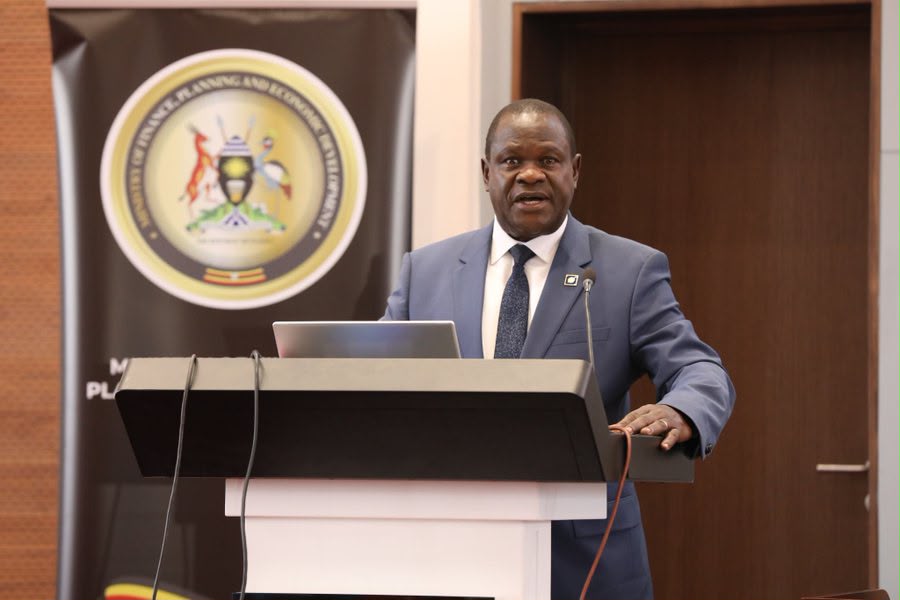
“Growth alone should not be the measure of success of the retirement benefits sector. A resilient sector is one in which members’ savings are preserved until retirement, and in which the interest credited to members is supported by income actually earned,” Musasizi said.
Speaking at the launch of the 13th Annual Retirement Benefits Sector Report 2026, he urged trustees, fund managers and industry players to strengthen governance, manage investment risks and keep members’ interests central to their decisions.
The Minister noted that the sector had recorded average annual growth of 15% over the past decade, rising from under Shs4 trillion before the Uganda Retirement Benefits Regulatory Authority (URBRA) was established in 2011 to nearly Shs40 trillion. Average return on investment stood at 21.5%, while retirement savings rose from 8.4% of gross domestic product at the start of the reforms to 14.7%.

However, Musasizi said these gains must be protected through prudent investment decisions amid market volatility and growing exposure to specific asset classes. Schemes must withstand market fluctuations, manage liquidity prudently and keep operating costs reasonable.
He said Government would continue creating opportunities for retirement schemes to invest in infrastructure, energy, transport, housing and industrial parks to mobilise domestic savings for national development through public-private partnerships, infrastructure bonds, real estate investment trusts and other suitable structures.
Musasizi emphasised that investments using members’ savings must deliver fair returns commensurate with risk, backed by transparent pricing, sound project preparation and strong legal safeguards. Government will also strengthen the public-private partnership framework, prepare bankable projects and deepen domestic capital markets to expand institutional investment options.
URBRA Executive Director Martin Nsubuga said heavy concentration in the banking sector—accounting for more than 70% of investment exposure cited in his presentation—highlighted the need to diversify portfolios and reduce risk.
He said URBRA will continue strengthening supervision around financial stability, operational efficiency, investment risk management and member fund protection, while expanding technology use through risk-based supervision, improved off-site surveillance and targeted inspections.
Nsubuga added that URBRA will enforce greater transparency and accountability by requiring schemes to give members timely, accurate information on investment performance, costs and risks. While crediting trustees, fund managers, custodians and service providers for the sector’s growth, he stressed that performance must deliver meaningful member benefits.
Expanding coverage remains a priority, especially among workers and small and medium-sized enterprises underserved by existing schemes, alongside addressing delays in remitting contributions and unclaimed tax credits.
URBRA’s Director of Research and Strategy, Benjamin Mukiibi, said schemes must improve contribution frequency and levels, diversify investments, manage costs and pay benefits on time. With roughly four million member accounts against an estimated 10.4 million potential participants, he said URBRA is exploring ways to include non-standard workers without conventional employment contracts.

















Leave a Reply