



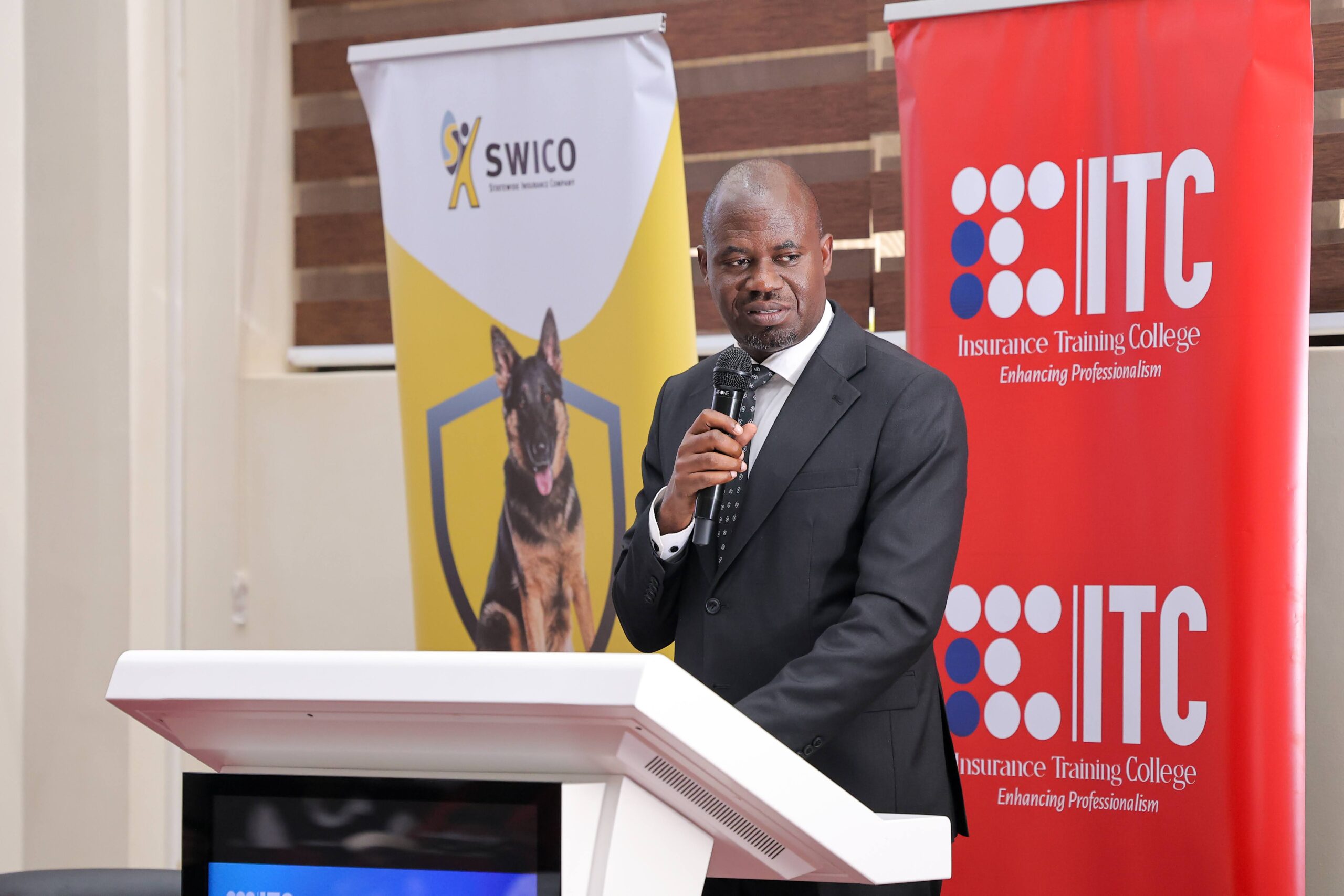
Dr Protazio Sande Acting CEO insurance Regulatory Authority of Uganda
Uganda’s insurance industry has crossed the Shs2 trillion premium mark for the first time, signalling renewed confidence in the sector as life insurance, digital solutions and stronger claims settlement drive growth.
The Insurance Regulatory Authority of Uganda (IRA) recently announced that the industry recorded gross written premiums of Shs2.024 trillion in 2025, up from Shs1.764 trillion in 2024, representing a 14.72% growth.
IRA acting chief executive officer Dr Sande Protazio said the performance reflects a more resilient insurance sector that is playing a growing role in economic development, financial inclusion and social protection.
“The insurance industry recorded landmark achievements in 2025 as total gross written premiums surpassed the Shs2 trillion mark for the first time,” Dr Protazio said while releasing the sector’s audited performance results for the year.
He said the growth was supported by rising public confidence, improved claims payment, increased use of digital platforms, expansion of bank assurance and reforms aimed at strengthening market conduct.
Life insurance drives market transformation
The biggest shift in the sector was recorded in life insurance, which grew by 39.21% during the year, significantly outpacing non-life insurance growth.
Life insurance premiums increased its contribution to total industry premiums to 48.31%, bringing the market closer to a balance between life and non-life business.
Non-life insurance accounted for 49.49% of total premiums, while health membership organisations contributed 1.49%.
Dr Protazio said the changing market composition represents a major transformation for Uganda’s insurance industry, which for years has been dominated by non-life products.
“Ten years ago, life insurance was around 25% while non-life was in the 70s. What we are seeing now is a more normal market structure,” he said.
He said the growth of life insurance reflects increasing appreciation of insurance as a tool for long-term financial security, retirement planning, wealth creation and family protection.
Claims payments boost confidence
The regulator attributed the sector’s growth partly to improved confidence among customers due to increased claims settlement.
The industry paid gross claims amounting to Shs934.55 billion in 2025, equivalent to 46.2% of total gross written premiums.
Dr Protazio said the figures demonstrate that insurers are increasingly honouring their obligations to policyholders.
“Nearly Shs1 trillion was paid to policyholders, beneficiaries, families and businesses. For those who have been saying insurers do not pay, we invite you to come and look at these figures,” he said.
He added that IRA maintains zero tolerance for failure to pay legitimate claims, saying timely settlement remains critical to restoring public trust in insurance.
Digital platforms expand access
The regulator said innovation and technology continue to reshape the insurance landscape by making products easier to access.
Dr Protazio said increased use of mobile solutions, digital platforms and decentralised distribution channels has accelerated insurance uptake.
Bank assurance also emerged as one of the fastest-growing channels, with premiums generated through banks increasing to Shs302.26 billion in 2025 from Shs225 billion in 2024.
This represented a 34.33% growth, reflecting stronger partnerships between banks and insurers.
“Bank assurance continues to expand as people choose it as a one-stop centre for financial solutions,” Dr Protazio said.
Brokers generate Shs564b business
Insurance brokers also recorded growth in absolute business generated, although their market share declined slightly.
Premiums generated through brokers increased to Shs564.8 billion in 2025 from Shs428.45 billion in 2024, representing 31.85% growth.
However, brokers’ contribution to total industry premiums stood at 27.91%, down from previous levels.
Dr Protazio explained that the decline was mainly due to changes in reporting, where reinsurance brokerage business is now reported separately from primary insurance brokerage.
He said the adjustment does not mean brokers performed poorly but reflects improved classification of industry data.
Microinsurance gains momentum
Microinsurance emerged as one of the fastest-growing segments, supporting efforts to extend insurance services to lower-income households and vulnerable groups.
Premiums generated by Microinsurance companies increased to Shs7.33 billion in 2025 from Shs1.64 billion in 2024, representing growth of more than 340%.
Dr Protazio attributed the growth to new entrants into the market and interventions aimed at promoting financial inclusion.
He said expanding insurance access to farmers, households and small businesses remains central to the regulator’s agenda.
Sector remains financially strong
The industry also maintained strong financial stability, with total assets rising to Shs3.459 trillion during the year.
The sector remained well-capitalised, with average capital adequacy ratios of 250% for life insurers and 266% for non-life insurers, both above the regulatory minimum requirement of 200%.
Dr Protazio said the strong capital position provides confidence that insurers can meet policyholder obligations and withstand economic shocks.
“The insurance sector remains financially sound, resilient and well capitalised,” he said.
Positive outlook for 2026
Looking ahead, IRA said the outlook for the insurance industry remains positive, supported by economic growth, infrastructure investments and emerging opportunities in key sectors.
Dr Protazio said major government investments in infrastructure, energy, oil and gas, mining, manufacturing and logistics are expected to create new demand for insurance products.
Projects such as the Standard Gauge Railway (SGR), Afcon-related infrastructure developments and expansion in industrial sectors are expected to generate opportunities for insurers by covering construction, operational and investment risks.
Other growth areas include agriculture, trade, financial inclusion and climate-related risk protection.
IRA projects that the insurance sector will maintain growth above 10% in 2026.
Dr Protazio said the regulator will continue working with industry players to deepen insurance penetration and extend coverage to the last mile.
“Our dream is that every farmer, every household and every business should have their assets protected. If that happens, then we shall say we have achieved,” he said.
He added that IRA will continue strengthening innovation, consumer protection, market supervision and financial stability to support a more inclusive insurance sector.
Despite the strong performance, the regulator said more work remains to be done to ensure insurance becomes part of everyday financial planning for Ugandans.















Leave a Reply