


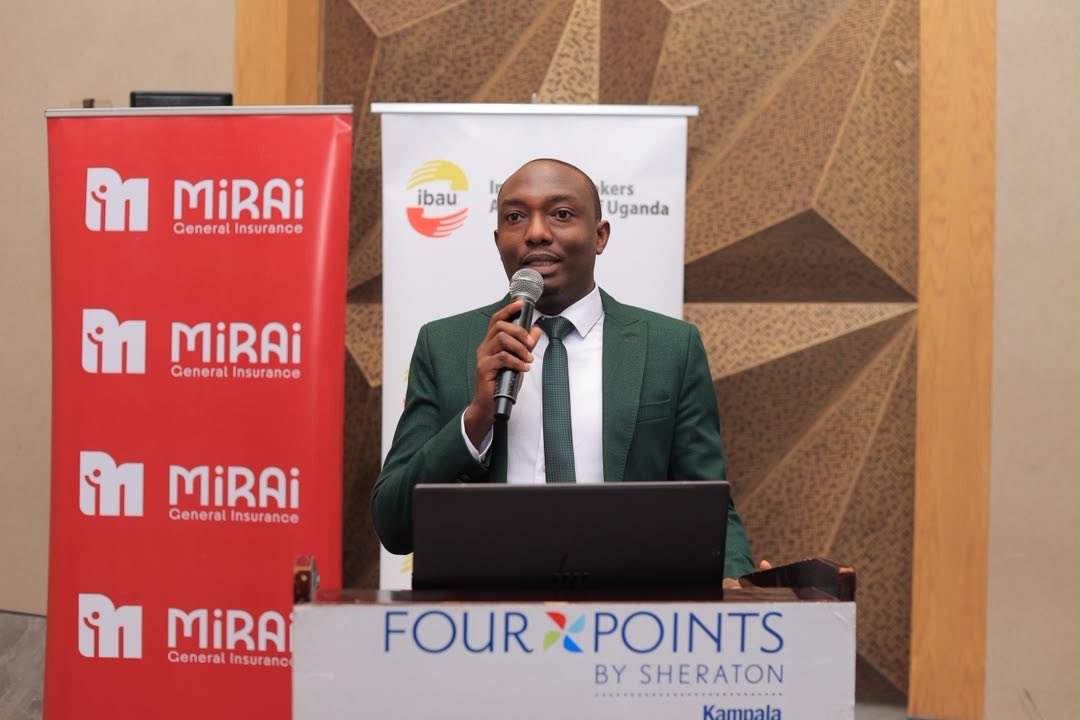
Joseph Nsubuga -Mirai Insurance Chief Executive Officer
Mirai Insurance has called on insurance players to invest in workforce skills development as the sector prepares for rapid changes driven by artificial intelligence (AI), evolving labour laws and emerging business opportunities. Speaking during the Insurance Brokers Association of Uganda (IBAU) CEO Breakfast Meeting held at Four Points by Sheraton Kampala, Mirai Insurance Chief Executive Officer Joseph Nsubuga said businesses must find a balance between adopting new technologies and strengthening human capacity.
The meeting, held under the theme “Human Resource Trends: What is keeping business leaders awake,” brought together brokers and industry stakeholders to discuss workforce challenges affecting the sector.
Nsubuga said while AI is transforming business operations, it cannot replace the role of skilled employees who are needed to operate and maximise the value of new technologies.
“There is AI, but it cannot work alone. We need people to work on the tools and work with the AI tools. We cannot dispense with people; we need people,” Nsubuga said.
He said Mirai Insurance organised the engagement to strengthen collaboration with brokers, who play a critical role in connecting insurers with customers.
“As Mirai, we see brokers as a very important stakeholder because they contribute a big portion of the gross written premium. They also bring expertise and have the clients we are targeting,” he said.
Nsubuga added that insurers must continue building partnerships with brokers to improve service delivery and expand insurance penetration. The call for skills development was reinforced by Human Resource Managers Association of Uganda President Paul Rumanda Rugambwa, who warned that Uganda’s biggest workforce challenge is not a shortage of people but a shortage of relevant skills. “For every one position we advertise, we get at least 100 applicants. We are not short of people; we are short of the skills we are looking for,” Rugambwa said.
He said organisations must shift from focusing on increasing headcount to building capabilities that match future business needs.
“We need to shift from short-term headcount planning to strategic capability planning, where we look at the skills we need today, how ready our people are today and how ready they will be tomorrow,” he said.
Rugambwa cautioned companies against rushing to acquire AI tools without preparing their employees, saying technology investments will only succeed when supported by skilled and adaptable workers.
“We are rushing to buy software, but the question is, are we buying readiness of our people?” he asked.
He noted that AI, oil sector growth and changing employment regulations will increase competition for skilled workers, forcing companies to deliberately retain and develop talent.
Meanwhile, IBAU Chief Executive Officer Christopher Mugisha said the discussion was timely because the insurance industry is entering a period of significant transformation.
“We have noticed that so much is going to change in how we employ people and how we manage employees. It is not going to be work as usual,” Mugisha said.
He added that insurance companies must embrace technology while ensuring employees improve their skills and productivity.
“AI will not completely replace the human capital that we have. What is important is that we work on ourselves to perform effectively,” he said.
The stakeholders agreed that future competitiveness in the insurance industry will depend on companies’ ability to develop skilled employees, adapt to technological changes and create workplaces that prepare staff for the demands of tomorrow.









Leave a Reply